

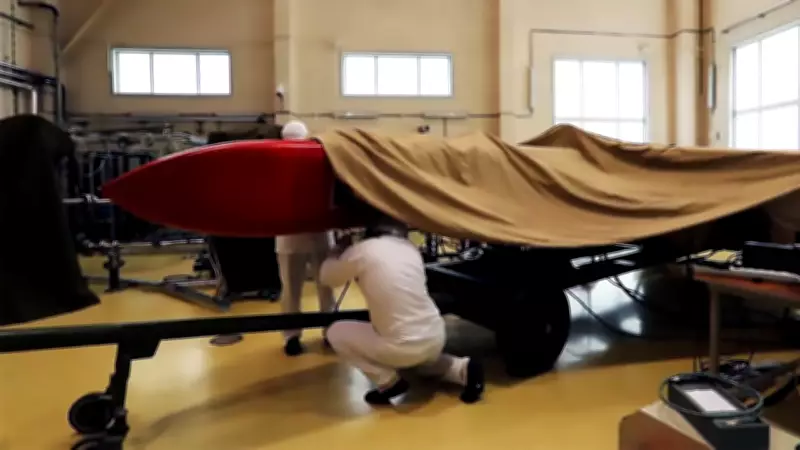
MIT Study Reveals Radioactive Risks of Russia's Burevestnik Missile
A new study by researchers from the Massachusetts Institute of Technology (MIT) warns that Russia's Burevestnik nuclear-powered cruise missile, known to NATO as the SSC-X-9 Skyfall, could release radioactive material into the atmosphere during flight. The findings, published by MIT researchers Jake Hecla and R Scott Kemp, highlight significant environmental and safety risks associated with one of President Vladimir Putin's most ambitious strategic weapons programs.
How the Burevestnik Propulsion System Works
The study concludes that the Burevestnik is “almost certain” to use a direct-cycle air-breathing nuclear propulsion system, most likely powering a turbojet engine. Unlike conventional nuclear reactors that employ a closed-loop cooling system, this design draws atmospheric air directly through the reactor core, heats it, and expels it to generate thrust. While this approach allows for a lighter and more compact engine, it creates the risk of radioactive contamination, according to the researchers.
The exhaust could contain radioactive isotopes such as argon, krypton, and carbon, potentially scattering them across the atmosphere and the ground below. The longer the missile remains airborne, the greater the amount of radioactive material that could be released. The study also warns that prolonged operation could damage the reactor itself, as heat and compressed air may gradually corrode the reactor core, producing additional radioactive particles.

Historical Incidents and Testing Milestones
The MIT study revisits previous incidents linked to the Burevestnik program. In 2019, an explosion at a facility in Russia's White Sea region killed five Rosatom scientists and caused a temporary radiation spike. The researchers believe the accident may have involved an attempt to recover a Burevestnik reactor from the seabed. Russia announced in 2025 that the missile had successfully completed a 15-hour flight test above the Arctic, a milestone that researchers believe may represent the first sustained flight of a nuclear-powered aircraft.
Strategic Advantages and Future Implications
The Burevestnik's main advantage is its potentially near-unlimited range. Unlike conventional cruise missiles, it could remain airborne for extended periods and approach targets from unexpected directions, complicating enemy defense planning. First unveiled by Putin in 2018, the missile is part of a new generation of Russian strategic weapons designed to evade missile defenses. However, the MIT study suggests the program may be as much about developing future nuclear-powered technologies as it is about the missile itself. Researchers said the lessons learned could eventually contribute to more advanced systems, including nuclear-powered drones or space-based platforms.
The study concludes that the Burevestnik may represent a significant technological achievement, but one accompanied by serious environmental and safety concerns. While the missile could offer Russia a unique strategic capability, experts warn that its operation may come at the cost of releasing radioactive material into the environment and exposing people near its flight path to potential risks.






