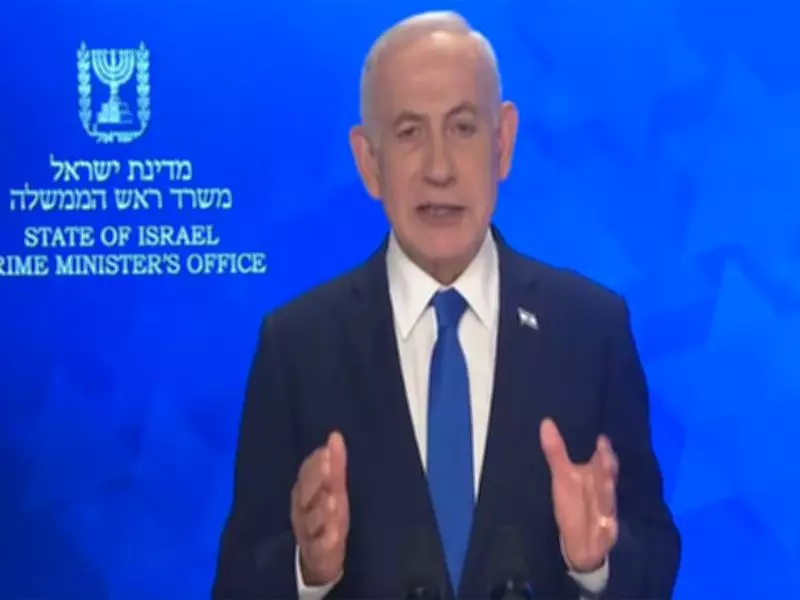
Netanyahu's Stark Warning to Iran's Mojtaba Khamenei: No Life Insurance for Regime Leaders
Israeli Prime Minister Benjamin Netanyahu has delivered a chilling and direct message to Mojtaba Khamenei, the son of Iran's Supreme Leader Ayatollah Ali Khamenei, amid heightened regional tensions. In a statement that underscores the volatile state of affairs in the Middle East, Netanyahu declared that Israel would not issue life insurance policies for any of Iran's leaders, a metaphorical warning highlighting the severe risks they face due to ongoing hostilities.
Escalating Rhetoric in the Israel-Iran Conflict
The warning comes against a backdrop of escalating rhetoric and military posturing between Israel and Iran. Netanyahu's comments are seen as a response to Iran's continued support for proxy groups and its nuclear ambitions, which Israel views as existential threats. This verbal exchange marks a significant intensification in the long-standing conflict, with Netanyahu directly targeting the inner circle of Iran's leadership, including Mojtaba Khamenei, who is considered a key figure in the regime's power structure.
Analysts interpret this statement as a clear signal that Israel holds Iran's leaders personally accountable for any aggressive actions. The use of the term "life insurance" is a stark metaphor, implying that the safety and security of Iranian officials cannot be guaranteed in the face of potential Israeli responses. This rhetoric aligns with Israel's broader strategy of deterrence, aimed at preventing further escalation while asserting its readiness to defend its interests.

Regional Implications and International Reactions
The warning has sparked concerns across the Middle East and beyond, with many fearing it could exacerbate an already tense situation. Regional powers are closely monitoring the developments, as any miscalculation could lead to broader conflict. International observers have noted that such direct threats from a head of state to another country's leadership are rare and could have diplomatic repercussions.
In recent months, Iran has increased its military activities, including missile tests and support for militias in neighboring countries, while Israel has conducted airstrikes on Iranian targets in Syria. Netanyahu's warning is likely intended to curb these actions by emphasizing the personal risks to Iran's top echelons. The statement also reflects Israel's frustration with international efforts to contain Iran's influence, pushing for more assertive measures.
Background on Mojtaba Khamenei and Iranian Leadership
Mojtaba Khamenei, often referred to as a potential successor to his father, holds significant sway within Iran's political and military spheres. His involvement in key decisions makes him a focal point in Israel's strategic calculations. By addressing him directly, Netanyahu aims to pressure Iran's leadership from within, potentially causing internal divisions or prompting a reassessment of their policies.
- Mojtaba Khamenei is a senior cleric and advisor to his father, involved in security and foreign policy matters.
- He is believed to have influence over the Islamic Revolutionary Guard Corps (IRGC), a major player in Iran's regional activities.
- Netanyahu's warning highlights the personalization of the conflict, shifting focus from state actors to individual leaders.
This development underscores the deepening animosity between Israel and Iran, with both sides engaging in a war of words that could have real-world consequences. As tensions simmer, the international community watches anxiously, hoping for de-escalation but preparing for potential fallout.