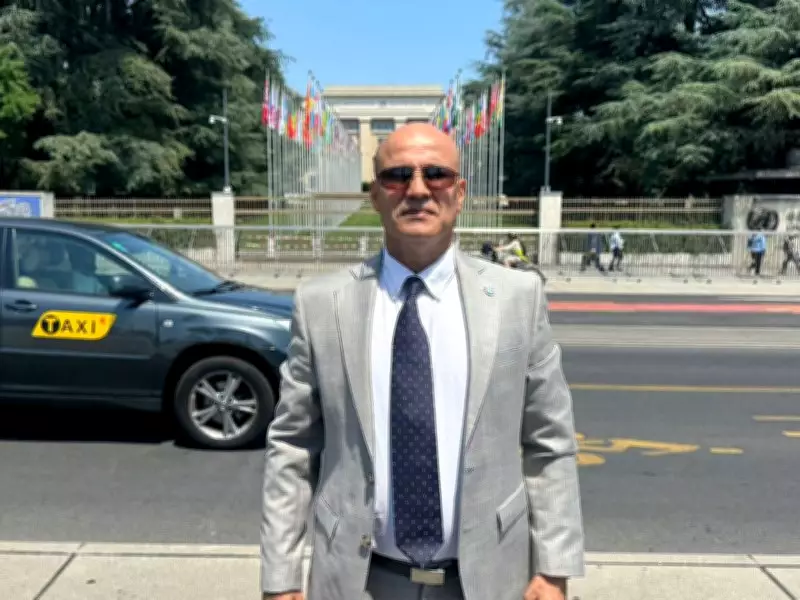
Fazal-ur-Rehman Afridi, a Pashtun human rights defender, has accused Pakistan of committing widespread human rights violations in Pakistan-occupied Jammu and Kashmir (PoJK), Balochistan, and Khyber Pakhtunkhwa. Speaking on the sidelines of the 62nd session of the United Nations Human Rights Council (UNHRC) in Geneva, Afridi called for an international inquiry into the allegations.
Crisis in PoJK
Afridi claimed the situation in PoJK has become "extremely critical" following the banning of the Jammu and Kashmir Joint Awami Action Committee (JKJAAC). He alleged that Pakistani security forces launched a violent crackdown, resulting in the deaths of dozens of civilians and injuries to hundreds more. Restrictions on the movement of food supplies and life-saving medicines have created a severe humanitarian crisis, he added. Afridi urged the United Nations and neighboring countries to raise the issue internationally and called on global media to highlight the alleged abuses.
Balochistan: Enforced Disappearances and Activist Sentenced
Turning to Balochistan, Afridi alleged that military operations and enforced disappearances continue across the province. He condemned the reported life sentence handed to Baloch human rights activist Dr. Mahrang Baloch, describing the judiciary as compromised. He called for her immediate release and the withdrawal of all charges against her.

Khyber Pakhtunkhwa: Heavy Weapons and Disappearances
Afridi accused Pakistani security forces of using heavy weaponry, including mortar shells, helicopter gunships, and air strikes, during operations in Khyber Pakhtunkhwa. He claimed civilians, particularly women and children, are bearing the brunt of the violence. He also alleged a sharp increase in enforced disappearances and noted that the case of PTM member Faridullah Khan Afridi has been submitted to the UN Working Group on Enforced or Involuntary Disappearances.
Call for Accountability
Afridi urged the UNHRC to investigate the alleged violations and prosecute military, intelligence, and police officials found responsible. He also demanded unrestricted access for international human rights organizations and journalists to conflict-hit regions.