

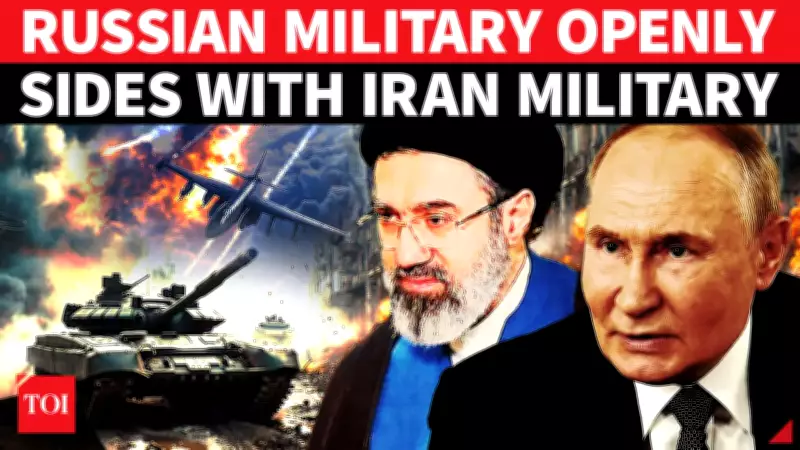
In a sign of deepening strategic alignment amid rising Middle East tensions, Russia's Defence Minister Andrey Belousov reaffirmed Moscow's backing for Tehran during talks with Iran's Deputy Defence Minister Reza Talaei-Nik on Tuesday in Kyrgyzstan. According to state news agency reports, Belousov stressed that Russia supports the sovereignty and territorial integrity of the Islamic Republic of Iran and insisted that the ongoing conflict should be resolved through diplomatic channels.
Growing Strategic Partnership
The meeting between Belousov and Talaei-Nik highlights the strengthening ties between Russia and Iran as both nations face pressure from Western powers. The discussions took place on the sidelines of a regional security forum in Bishkek, where military officials from several countries gathered to address common threats. Russia's open declaration of support comes at a time when Iran is locked in a tense standoff with Israel and the United States over its nuclear program and regional influence.
Diplomatic Resolution Emphasized
Belousov's remarks underscored Moscow's preference for a negotiated settlement rather than military escalation. He called for all parties to exercise restraint and engage in dialogue to prevent further destabilization of the Middle East. The Russian defence minister also reiterated Moscow's commitment to the territorial integrity of Iran, signaling opposition to any external intervention that could undermine Tehran's sovereignty.

Regional Implications
The reaffirmation of Russian support for Iran is likely to have significant implications for the region. It comes amid reports of increased U.S. military presence in the Persian Gulf and ongoing Israeli airstrikes on Iranian-linked targets in Syria. Russia's stance could embolden Iran to maintain a hardline posture in negotiations, while also complicating efforts by the U.S. and its allies to isolate Tehran diplomatically.
Context of Rising Tensions
The meeting in Kyrgyzstan occurred against a backdrop of heightened hostilities. Recent weeks have seen a series of escalations, including Houthi attacks on shipping in the Red Sea, Hezbollah drone strikes on Israeli positions, and Iranian military exercises near the Strait of Hormuz. The U.S. has also conducted airstrikes against Iranian-backed militias in Iraq and Syria, further inflaming tensions.
Reactions from Other Players
While Russia's support for Iran is not new, the timing of Belousov's statement is significant. It comes as the U.S. and its allies are pushing for a renewal of UN sanctions on Iran over its missile program. Meanwhile, European powers have been trying to revive the 2015 nuclear deal, but talks have stalled. Russia's position could influence the dynamics of these negotiations, potentially giving Iran more leverage.
The deepening Moscow-Tehran axis is also evident in other areas, including military cooperation and energy deals. Russia has been supplying Iran with advanced weapons systems and technology, while Iran has provided drones and other support for Russia's war in Ukraine. This symbiotic relationship is likely to continue as both countries seek to counter U.S. influence globally.
Looking Ahead
As the situation in the Middle East remains volatile, the Russian-Iranian partnership will be a key factor to watch. Diplomatic efforts to de-escalate tensions will need to account for Moscow's backing of Tehran. Meanwhile, the U.S. and Israel are likely to view Russia's stance with concern, potentially leading to further friction in their own relations with Moscow. The coming weeks could see intensified diplomatic activity as all parties navigate this complex landscape.






