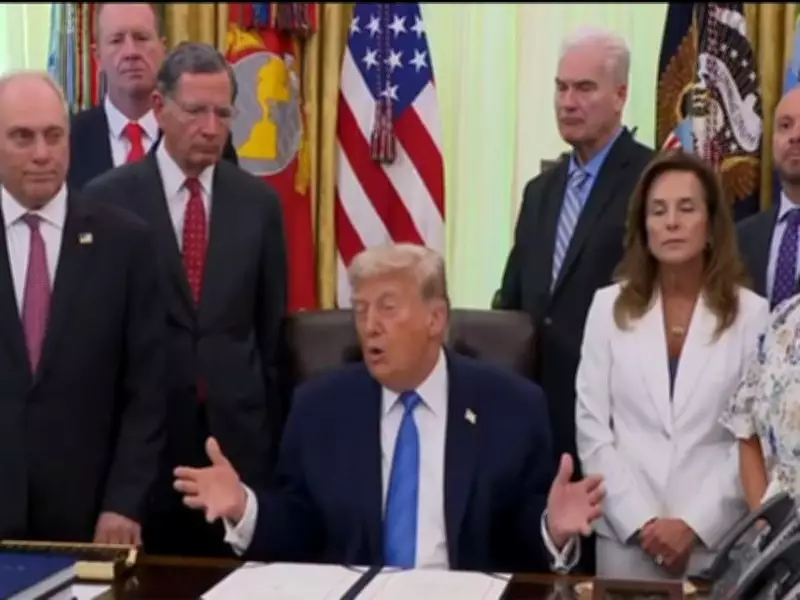
Amid escalating tensions between Iran and the United States, President Donald Trump issued a stark warning on Wednesday, asserting that if Iran obtained a nuclear weapon, it would lead to the destruction of Israel and destabilize the entire Middle East. Speaking from the Oval Office, Trump declared that the United States had already struck Iran hard and stood ready to strike again, as negotiations remained uncertain.
Trump's Strong Warning on Iran's Nuclear Ambitions
Trump stated unequivocally, "If they had a nuclear weapon, there'd be no Israel, there'd be no Middle East, and they would have absolutely shot at us." He emphasized that the US had launched strikes and would continue military operations, saying, "We hit them hard yesterday. We're going to hit them again hard today. We'll see what happens with the deal." The president also criticized Iran for prolonging negotiations, accusing them of taking advantage of previous US administrations that he described as "very stupid."
Renewed Military Action and Justification
Trump indicated that Iran's downing of a US Apache helicopter provided grounds for renewed military action. "Based on the helicopter, I guess we have the right to do that," he told reporters. The recent escalation began after US airstrikes targeted Iranian military positions along the Strait of Hormuz, a retaliatory move for the helicopter incident. In response, Iran launched strikes on a US base in Jordan and other Gulf targets, further heightening tensions.

The president reiterated that the US would not hesitate to attack Iran again, stating, "We're going to be attacking them, attacking them very hard." He suggested that the ongoing military campaign would persist until a satisfactory resolution is reached.
Implications for Regional Stability
Trump's comments underscore the high stakes in the Middle East, where Iran's nuclear program has long been a source of concern for Israel and other regional actors. The prospect of a nuclear-armed Iran, according to Trump, would not only threaten Israel's existence but also unravel the broader regional order. The US has consistently opposed Iran's nuclear ambitions, and the latest remarks signal a willingness to use military force to prevent Tehran from acquiring such capabilities.
As the situation develops, the international community watches closely, with the potential for further escalation or a diplomatic breakthrough remaining uncertain.