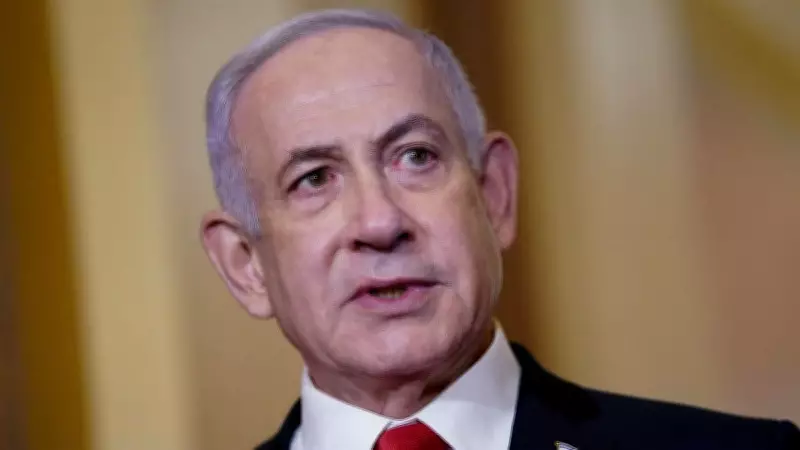
The United Arab Emirates has officially denied a claim made by the Israeli Prime Minister's office regarding a secret meeting between Prime Minister Benjamin Netanyahu and Emirati President Sheikh Mohamed bin Zayed Al Nahyan during the ongoing war with Iran.
Background of the Claim
Earlier on Wednesday, the Israeli Prime Minister's office stated that Netanyahu had traveled to the UAE and held talks with the Emirati president. The statement suggested that the meeting took place amid heightened tensions and military operations involving Iran. However, no further details were provided at the time.
UAE's Official Response
In a swift response, UAE officials categorically denied any such meeting. A spokesperson for the UAE government said, 'There is no truth to the claims made by the Israeli side. No meeting occurred between the Emirati president and the Israeli prime minister, and no visit took place.' The denial was issued through state media and diplomatic channels.

Regional Implications
The alleged meeting, if true, would have marked a significant development in Middle East diplomacy, especially given the ongoing conflict with Iran. The UAE and Israel normalized relations in 2020 under the Abraham Accords, but secret wartime meetings could have signaled deeper coordination. Analysts suggest the denial may reflect internal sensitivities or strategic disagreements.
Reactions and Analysis
Political observers have noted that such conflicting narratives can undermine trust between allies. Some speculate that the Israeli claim might have been a strategic leak to test public opinion or pressure the UAE. Others believe it could be a miscommunication. The Iranian government has not commented on the matter, but state media highlighted the denial as evidence of disunity among its adversaries.
As of now, neither side has provided concrete evidence to support their statements. The incident underscores the complex and often opaque nature of diplomatic engagements in the region.