US Intensifies Military Presence in Middle East with Dual Carrier Deployments
The United States is dramatically escalating its military footprint in the Middle East, deploying two aircraft carrier strike groups in a rare and powerful concentration of naval force. This strategic move unfolds against a backdrop of heightened tensions with Iran, as diplomatic efforts and military posturing intertwine.
Naval Power on Display: USS Gerald R Ford and USS Abraham Lincoln
The world's largest warship, the nuclear-powered USS Gerald R Ford, has entered the Mediterranean Sea after passing through the Strait of Gibraltar on Friday. Verified photographs captured the vessel with the Moroccan mountain range in the background, confirming its transit. According to ship-tracking data, the Ford briefly activated its automatic identification system (AIS) for the first time this year on Wednesday, transmitting its position off Morocco's Atlantic coast until 13:18 GMT while sailing toward the Mediterranean.
Simultaneously, the USS Abraham Lincoln, another nuclear-powered Nimitz-class aircraft carrier, has been identified in publicly available European Sentinel-2 satellite images taken on Saturday. The warship was located in the Arabian Sea, approximately 240 kilometers off the coast of Oman and about 700 kilometers from Iran. This marks its first sighting since reportedly entering the region in January, having navigated open sea areas with limited satellite coverage.

Diplomatic Maneuvers and Military Options
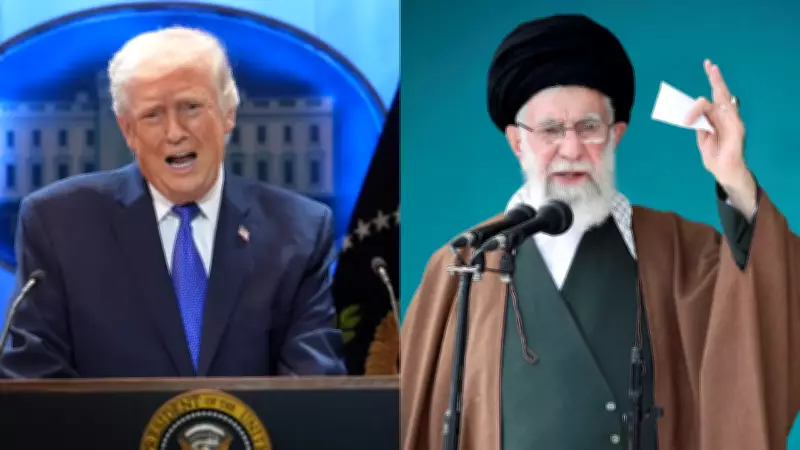
Amid this military buildup, President Donald Trump is reportedly considering a narrow Iran nuclear deal that could permit limited, "token" uranium enrichment. Pentagon officials are presenting a range of options, from diplomatic measures to potentially targeting Supreme Leader Ali Khamenei and his son. White House spokesperson Anna Kelly emphasized that "only President Trump knows what he may or may not decide" regarding future steps.
US and Iranian officials held a second round of talks in Switzerland earlier this week, with reports indicating progress. President Trump stated on Thursday that the world will likely find out within the next 10 days whether the US will reach a deal with Iran or take military action.
Comprehensive Warship Deployment in the Region
BBC Verify has tracked 12 US ships currently in the Middle East. The Abraham Lincoln, along with three Arleigh Burke-class destroyers, forms a carrier strike group. Additionally, two more destroyers capable of long-range missile strikes and three specialist littoral combat ships for near-shore operations are positioned at the US naval base in Bahrain.
Two other destroyers have been observed in the eastern Mediterranean near the Souda Bay US base, and one more is in the Red Sea. According to AFP, Washington currently maintains 13 warships in the Middle East—one aircraft carrier, nine destroyers, and three littoral combat ships. The arrival of the USS Gerald R Ford and its three escorting destroyers will increase the total number of US warships in the region to 17.
Both aircraft carriers are operated by more than 5,600 crew members and carry dozens of aircraft, significantly enhancing US naval and air power in the area.
Aircraft and Air Defenses Reinforcements
In addition to the aircraft aboard the carriers, the United States has deployed dozens of other warplanes to European and Middle Eastern airbases. Open-source intelligence accounts on X, flight-tracking website Flightradar24, and media reports confirm the presence of F-22 Raptor and F-35 Lightning stealth fighter jets, as well as F-15 and F-16 warplanes.
Support aircraft include KC-135 and KC-46 aerial refueling tankers for sustaining long-range operations. Other tracked aircraft moving to the region comprise:

- E-3 Sentry command and surveillance aircraft for coordinating large-scale operations
- C-17A heavy-lift transport aircraft for delivering troops and cargo
- Navy P-8A patrol and reconnaissance jets for long-range anti-submarine warfare
- C-5M strategic transport aircraft, the largest in the US Air Force
The United States has also reportedly bolstered land-based air defenses in the Middle East, while numerous guided-missile destroyers in the region provide air-defense capability at sea. Tens of thousands of US military personnel remain stationed on bases across the area, which are potentially vulnerable to counterattack. In June 2025, Iran launched missiles at a US base in Qatar after Washington struck three Iranian nuclear sites, but the missiles were intercepted by air defenses.
Iran's Response and Regional Show of Force
In response to recent US military movements, Iran has conducted its own show of force. On Monday, the Islamic Revolutionary Guard Corps (IRGC) launched a maritime drill in the Strait of Hormuz, located between Oman and Iran. The IRGC-linked Tasnim News Agency reported that IRGC Commander-in-Chief Maj Gen Mohammad Pakpour inspected naval vessels at a harbor before missiles were launched from a ship.
The arrival of the USS Gerald R Ford contributes to what has been tracked as a significant military buildup in the Middle East over recent weeks. This includes increased numbers of destroyers, combat ships, and fighter aircraft across the region and surrounding seas. Together, the Ford and Abraham Lincoln strike groups represent a major concentration of US naval and air power in the Middle East, underscoring the escalating geopolitical tensions.