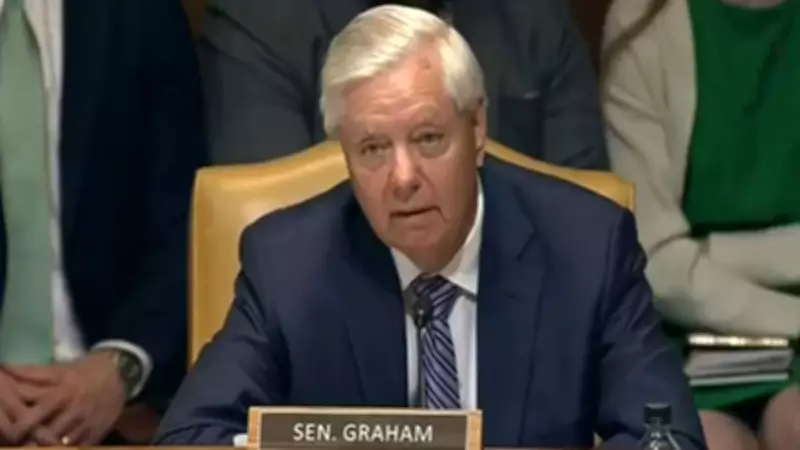
A United States senator has voiced strong opposition to Pakistan's role as a mediator in the ongoing negotiations between the United States and Iran. The senator described Pakistan's involvement as problematic, raising concerns about its suitability as an impartial intermediary given its historical ties and geopolitical interests.
Senator's Remarks on Pakistan's Mediation
The senator, speaking at a recent hearing, argued that Pakistan's track record and current alliances make it an inappropriate choice to facilitate talks between Washington and Tehran. He emphasized that the United States should seek mediators with a clear stance against terrorism and a commitment to regional stability.
Support for Trump's Abraham Accords Push
In contrast, the senator expressed strong support for former President Donald Trump's efforts to expand the Abraham Accords. The accords, which normalized relations between Israel and several Arab nations, are seen as a cornerstone of Trump's foreign policy legacy. The senator urged the current administration to build on these agreements to foster peace in the Middle East.

Implications for US-Iran Relations
The criticism of Pakistan's mediator role comes amid delicate US-Iran negotiations over Tehran's nuclear program. The senator's remarks highlight the deep divisions within the US political landscape regarding the best approach to engage with Iran. Some lawmakers advocate for direct talks without intermediaries, while others support a multilateral framework.
Reactions from Pakistan and Iran
Pakistan's foreign ministry has yet to respond officially to the senator's comments. However, analysts suggest that Pakistan views its mediator role as an opportunity to enhance its international standing. Iran, on the other hand, has not publicly commented on the senator's remarks but has previously welcomed Pakistan's involvement.
Broader Regional Dynamics
The debate over Pakistan's role also reflects broader regional dynamics, including India's growing ties with the US and Israel. Some experts argue that Pakistan's mediation could be seen as a counterbalance to India's influence in the region. However, the senator's criticism suggests that such efforts may face significant hurdles in Washington.
As the US-Iran talks continue, the question of who should mediate remains a contentious issue. The senator's backing of the Abraham Accords indicates a preference for a strategy that isolates Iran and strengthens alliances with Arab states. This approach contrasts with the Biden administration's willingness to engage with Iran through various channels.