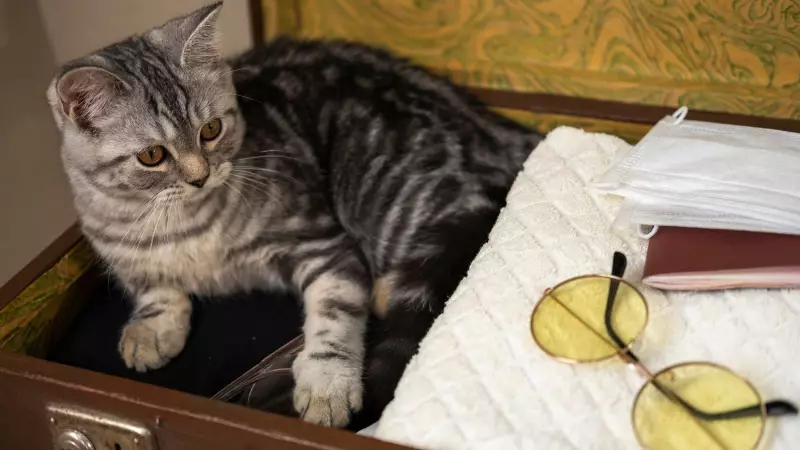
A groundbreaking new study has dramatically rewritten the history of one of humanity's most beloved companions: the domestic cat. For decades, the prevailing scientific belief was that cats first began their association with humans around 10,000 years ago in the Levant, coinciding with the dawn of agriculture. However, a comprehensive genetic analysis of ancient cat remains has now revealed that this pivotal bond is far younger, forming a mere 4,000 years ago in a different part of the world altogether.
The DNA Evidence That Changed the Timeline
The research, led by an international team of scientists, focused on extracting and analysing DNA from centuries-old cat bones discovered at various archaeological sites across Europe, North Africa, and Anatolia. By comparing this ancient genetic material with the DNA of modern domestic cats, the researchers could trace the evolutionary and geographical origins of domestication with unprecedented accuracy.
The findings were startling. Instead of the domestication process beginning 10,000 years ago, the genetic evidence clearly points to a much more recent timeline. Professor Greger Larson from the University of Oxford expressed his surprise, noting the stark contrast between the cats' deep integration into modern life and their relatively recent history with us. "They are ubiquitous, we make TV programmes about them, and they dominate the internet. That relationship we have with cats now only got started about 3.5 or 4,000 years ago, rather than 10,000 years ago," he explained.

Northern Africa: The True Cradle of Cat Domestication
Perhaps the most significant revelation from the study is the location where this human-feline partnership truly began. The DNA trail leads not to the Fertile Crescent, as long theorised, but further west to northern Africa.
"Instead of happening in that area where people are first settling down with agriculture, it looks like it is much more of an Egyptian phenomenon," stated Prof. Larson. This conclusion powerfully aligns with the well-documented reverence for felines in ancient Egyptian society, where cats were immortalised in art, mythology, and even mummified to accompany their owners into the afterlife.
Once the bond was forged in Egypt, cats began their global journey. Their innate talent as hunters made them invaluable companions on sea voyages, where they protected vital food stores from rodents. The research indicates that cats reached Europe around 2,000 years ago, much later than previously assumed, likely travelling with Roman armies and later along trade routes like the Silk Road into Asia.
The Leopard Cat: A Separate, Ancient Chinese Association
In a parallel discovery, the study shed light on a different wild feline in ancient China. Long before domestic cats arrived from the west, another species—the leopard cat—had formed a loose, commensal relationship with human settlements approximately 3,500 years ago.
Professor Shu-Jin Luo of Peking University described this unique arrangement. "Leopard cats benefited from living near people, while humans were largely unaffected or even welcomed them as natural rodent controllers," she said. However, unlike the African wildcats that evolved into the pets we know today, the leopard cats of Asia never underwent full domestication and remain wild to this day.
In a modern twist of this ancient story, the intentional crossing of leopard cats with domestic cats has produced the Bengal cat breed, which was formally recognised only in the late 20th century.
This research, published in the prestigious journals Science and Cell Genomics, not only corrects a long-held historical inaccuracy but also deepens our understanding of how two independent species chose to intertwine their destinies, changing the world forever.