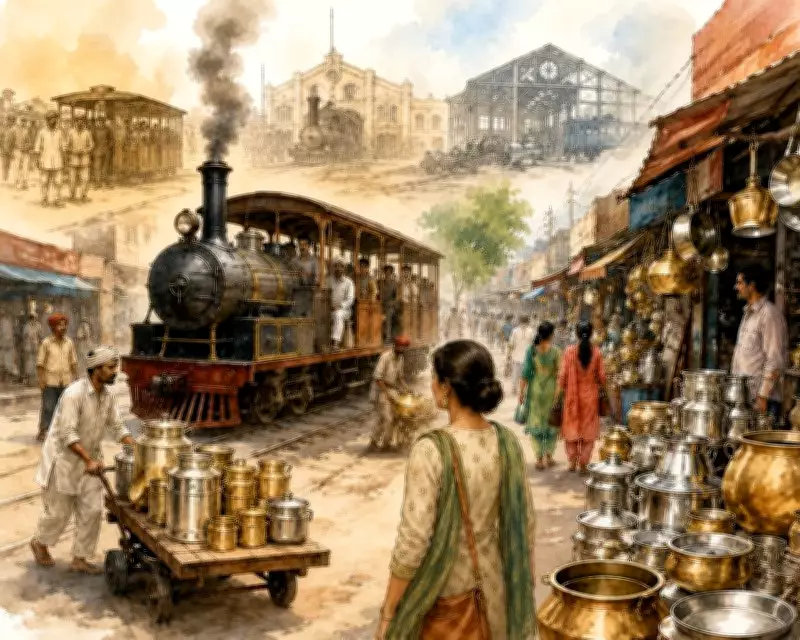
In the small town of Jagadhari, Haryana, a narrow street known as Railway Road puzzles newcomers with its name, as there are no railway tracks in sight. The road, lined with utensil shops, godowns, and factories, is a bustling commercial hub, but its name harks back to a bygone era.
Historical Tramway
In 1911, Raja Jyoti Prasad through his venture, the Jagadhari Light Railway Company, built a narrow gauge steam tramway connecting the railway station to the main bazaar. This tramway carried both passengers and goods, facilitating trade and daily commute during the colonial period. According to octogenarians of the town, the tramway was a progressive initiative that boosted local business and connected the community.
Discontinuation and Legacy
The tramway was discontinued in 1950, but its imprint remains. The road that once hosted the tracks is still called Railway Road, and a parallel lane running from Jagadhari to Yamunanagar is known as ‘choti line’ (small line), another relic of the tramway. Additionally, Jagadhari Workshop, established in 1952, is the first major post-independence Carriage and Wagon Workshop of Indian Railways, holding numerous certifications and awards.

Interestingly, while there are two interstate bus stands—one in Jagadhari and one in Yamunanagar—there is only one railway station: Jagadhari, located at the Yamunanagar end. This anomaly adds to the town's unique character.
Cultural Significance
Suruchi Kalra Choudhary, who wrote about her discovery of this history, noted, “The narrow road, which is more like a street, is testament to the acronym: Jagadhri the city of utensils/the brass town.” The road remains a vibrant marketplace for all kinds of kitchenware, from hereditary shops to modern export units.
The story of Railway Road illustrates how historical infrastructure, even when removed, can leave a lasting mark on a town's identity. As American author Albert Bigelow Paine once said, “What we do for ourselves dies with us. What we do for others and the world remains and is immortal.” In Jagadhari, the tramway may be gone, but its legacy lives on in the names and memories of its people.