The World's Largest Landlocked Countries: An In-Depth Look
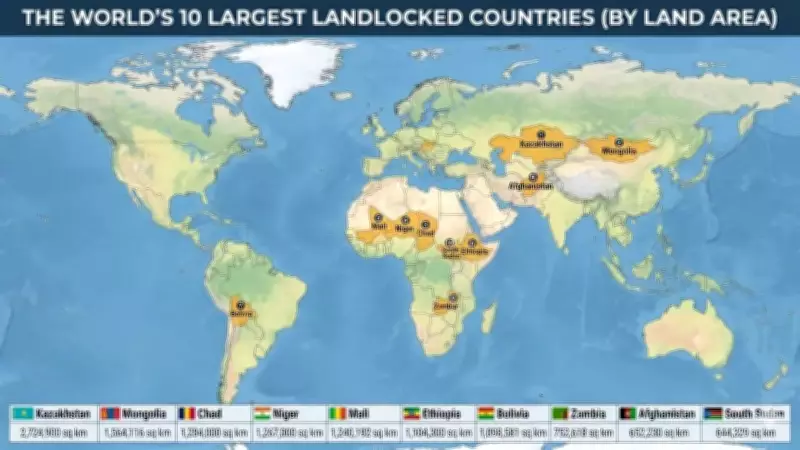
In global geography, nations are often defined by their coastlines or proximity to oceans. However, some countries exist entirely without ocean access, known as landlocked countries. These nations, lacking direct maritime borders, face unique challenges and opportunities in their development. According to the UNCTAD List of Landlocked Developing Countries, there are approximately 32 such countries, each playing a crucial role in economic, cultural, and ecological spheres despite their geographical constraints. Geography profoundly influences their economies and international relations, shaping landscapes from deserts to mountains. Below, we explore the ten largest landlocked countries worldwide, highlighting what makes them distinctive.
Top Ten Largest Landlocked Countries
Kazakhstan (2,724,900 sq km): As the largest landlocked country on Earth, Kazakhstan is situated in Central Asia. It boasts diverse terrains including steppes, deserts, and mountains. Although it lacks ocean access, it borders the Caspian Sea, which significantly supports its economy through oil extraction and other industries.
Mongolia (1,564,116 sq km): The second-largest landlocked nation, Mongolia lies between Russia and China. It is renowned for its vast grasslands and the Gobi Desert. With a low population density, Mongolia relies on mining and animal husbandry for economic growth.

Chad (1,284,000 sq km): One of Africa's largest landlocked countries, Chad is centrally located on the continent. Its geography ranges from northern deserts to southern green vegetation, influencing its agricultural and ecological dynamics.
Niger (1,267,000 sq km): Located in West Africa, Niger is predominantly covered by the Sahara Desert, making it one of the hottest countries globally. Despite harsh conditions, the Niger River is vital for agricultural development.
Mali (1,240,192 sq km): Also in West Africa, Mali features extensive desert areas. The Niger River flows through the country, historically supporting trade routes during ancient empires.
Ethiopia (1,104,300 sq km): The most populous landlocked country and one of Africa's oldest nations, Ethiopia is characterized by the Ethiopian Highlands, plateaus, and valleys. It lost its coastline in the 1990s but remains a key player in the East African economy.
Bolivia (1,098,581 sq km): One of only two landlocked countries in South America, Bolivia lost its coastline during the 19th-century War of the Pacific. Its geography includes diverse landscapes from mountains to lowlands.
Zambia (752,618 sq km): Situated in southern Africa, Zambia is rich in rivers and waterfalls, such as Victoria Falls. These water bodies are essential for transport and hydroelectricity production, driving its economy.
Afghanistan (652,230 sq km): Located in South-Central Asia, Afghanistan's mountainous terrain and poor infrastructure have shaped its regional connections and economic challenges.
South Sudan (644,329 sq km): As one of the world's youngest nations, South Sudan is in East-Central Africa. It features swamps and rivers like the Nile, which are critical for agriculture and economic sustainability despite the lack of a coastline.
Conclusion
Landlocked countries demonstrate resilience and innovation in overcoming geographical limitations. From Kazakhstan's Caspian Sea resources to Ethiopia's highland economy, these nations contribute significantly to global diversity and development. Understanding their unique features sheds light on the broader impacts of geography on national progress.