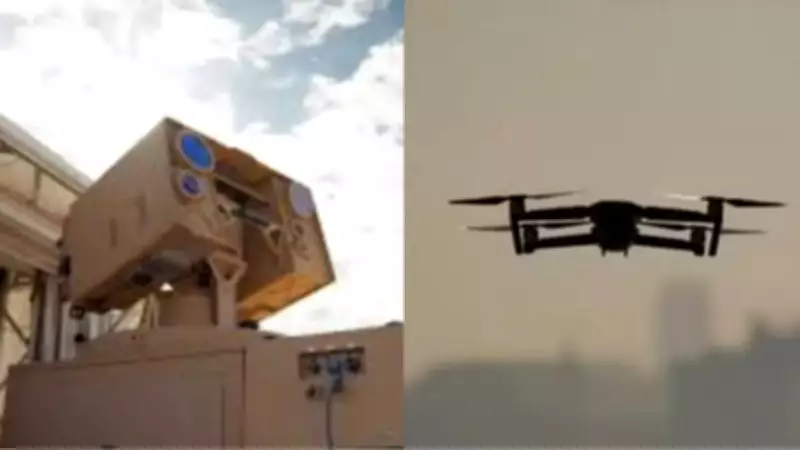
Anti-Drone Laser Defense System Installed in Florida to Protect High-Profile Figures
A cutting-edge anti-drone defense system, featuring a direct energy weapon or laser-based interceptor, has been deployed near Palm Beach International Airport in Florida. This installation aims to enhance security for prominent individuals, including Pete Hegseth, Marco Rubio, and President Donald Trump, along with safeguarding civilian aircraft and high-value sites like Mar-a-Lago.
Rising Drone Threats Prompt Deployment
The deployment comes as concerns over drone threats escalate globally, with incidents from Ukraine to Iran highlighting their role in modern warfare. Military experts note that this system represents a strategic shift in U.S. airspace security, designed to counter potential drone attacks in sensitive civilian and political zones.
Local media reports confirm the system adds a new defensive layer around the president's residence and flight paths, reflecting heightened vigilance by security agencies against drone-based surveillance and assaults. The technology is mobile, allowing for rapid deployment and potential expansion to other airports and high-security locations nationwide.

How the Anti-Drone Laser System Operates
The anti-drone system integrates multiple layers of detection and neutralization technologies to intercept threats before they can inflict damage. Matthew "Whiz" Buckley, a former Navy Top Gun pilot, explained that it utilizes sensors, radar, electronic warfare tools, and laser weapons.
Detection and Tracking: The system first identifies and monitors incoming drones using radar and sensor arrays. Once a threat is detected, it can employ electronic jamming to disrupt the drone's communication and navigation systems.
Laser Neutralization: The laser weapon emits a direct energy beam, invisible to the naked eye, which can disable or destroy drones mid-air by heating critical components. Buckley emphasized, "They can use lasers to shoot drones down, and they can also use direct energy to scramble the electronics and to jam the systems to knock these drones down."
Reasons for Current Deployment
Security experts cite the rapid proliferation of drone warfare as a primary driver for this deployment. Buckley warned, "Imagine what a flock of drones can do to an airliner that is taking off out of Palm Beach or landing," drawing parallels to aviation incidents like the Miracle on the Hudson.
The concern is that coordinated drone swarms could overwhelm traditional defenses, posing risks to civilian aviation and high-profile targets. Aviation expert Dewitt Ingram assured that the system enhances safety, stating, "The safest place to fly in and out of is Palm Beach airport, especially if the President's residence is nearby."
Ingram added that the increased visibility of such systems reflects rising threat levels, noting, "We're at war as a nation, and this is a defensive posture that the US military does to protect the liberties and the freedom of the American people and defend the president."
Understanding Direct Energy Weapons
A direct energy weapon, commonly known as a laser weapon, uses concentrated electromagnetic energy instead of conventional ammunition. Unlike missiles or bullets, these systems fire energy beams at light speed, enabling rapid targeting and engagement.
They are considered cost-effective compared to interceptor missiles and can be reused with minimal logistical support. As drone threats evolve, militaries worldwide are increasingly testing and deploying such technologies.
Wider Deployment and Safety Concerns
The United States is considering expanding similar anti-drone laser systems to Washington, particularly near Fort Lesley J. McNair, where officials like Pete Hegseth and Marco Rubio reside, following reports of unusual drone activity.
However, this expansion has raised concerns among aviation regulators. The Federal Aviation Administration has flagged potential safety risks, even as the Pentagon advocates for broader deployment to counter drone incursions. Officials assert that the systems are designed to operate safely within civilian airspace and may become standard at major airports and strategic locations in the future.