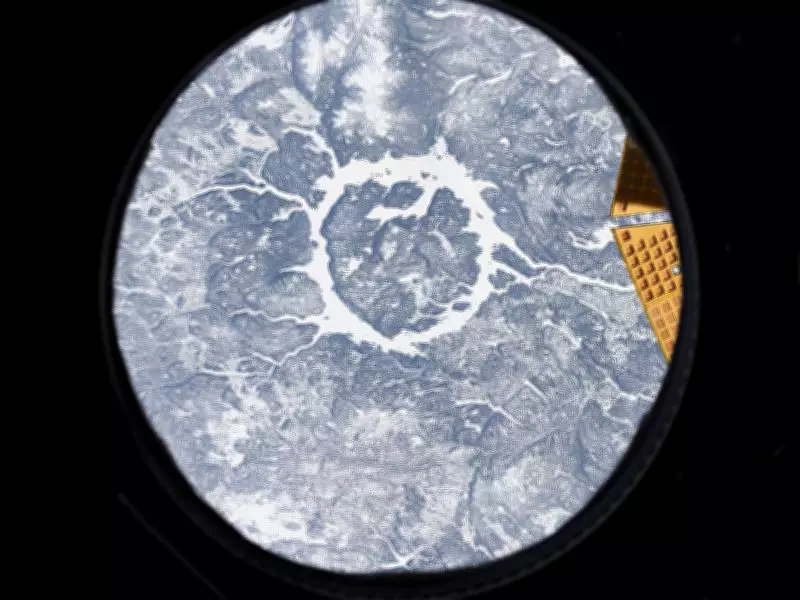
NASA's Artemis Mission to Probe Moon Craters for Earth's Ancient Secrets
In a groundbreaking scientific endeavor, the crew of NASA's Artemis mission is set to embark on an extensive study of the Moon's craters, aiming to unlock profound insights into Earth's distant past. This initiative represents a significant leap in lunar exploration, focusing on geological formations that may hold clues to the early solar system's dynamics.
Unveiling Planetary History Through Lunar Geology
The Artemis team will meticulously analyze crater structures, composition, and distribution on the lunar surface. Scientists believe that these craters, formed by ancient impacts, preserve a record of cosmic events that also shaped Earth billions of years ago. By examining lunar samples and remote data, researchers hope to reconstruct timelines of asteroid and comet collisions that influenced both celestial bodies.
This research could revolutionize our understanding of planetary evolution, offering a window into eras when Earth was undergoing dramatic changes, such as the formation of its atmosphere and oceans. The Moon's lack of atmospheric erosion makes it an ideal archive for studying these primordial processes.

Technological Advancements and Mission Objectives
Equipped with state-of-the-art instruments, the Artemis crew will conduct high-resolution mapping and spectroscopic analyses to identify mineralogical signatures within craters. Key objectives include:
- Assessing the age and origin of impact basins to correlate with Earth's geological epochs.
- Investigating volatile deposits in permanently shadowed regions, which may hint at water delivery to early Earth.
- Analyzing crater ejecta to trace the history of solar system bombardment.
These efforts are part of NASA's broader strategy to establish a sustainable human presence on the Moon, paving the way for future missions to Mars and beyond. The findings are expected to inform models of planetary formation and the potential for life elsewhere in the universe.
Implications for Science and Future Exploration
The insights gained from this crater study could have far-reaching implications, not only for astronomy but also for fields like geology and climatology. By comparing lunar and terrestrial records, scientists aim to resolve long-standing questions about Earth's early environment and the factors that enabled habitability.
This mission underscores the importance of international collaboration in space exploration, with data sharing planned among global partners. As the Artemis program progresses, it promises to deliver unprecedented knowledge about our cosmic neighborhood, inspiring new generations of explorers and researchers.