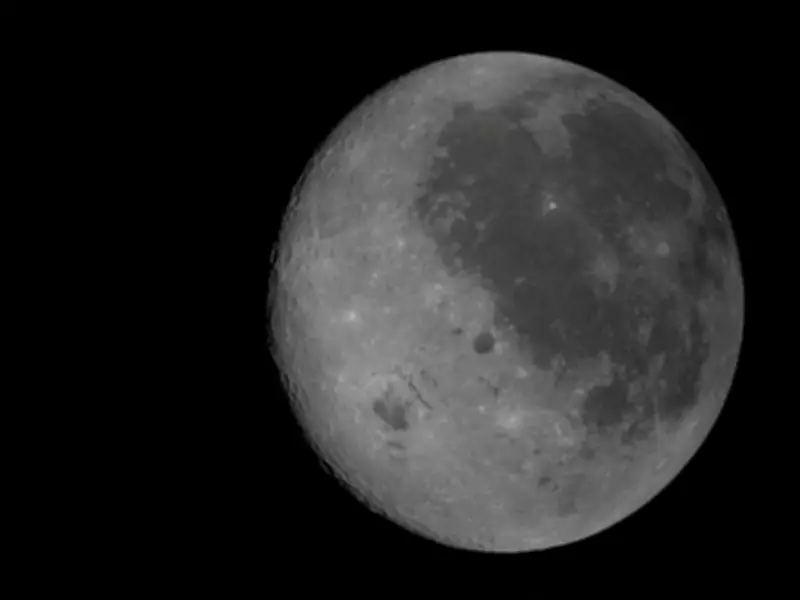
Artemis II Mission Achieves Historic Milestone in Space Exploration
In a groundbreaking achievement for human spaceflight, NASA's Artemis II mission has officially broken the record for the farthest distance traveled by humans from Earth. This milestone surpasses the previous record set by the Apollo 13 mission in 1970, marking a significant step forward in the United States' renewed push for lunar exploration and beyond.
Surpassing Apollo 13's Long-Standing Record
The Artemis II spacecraft, carrying a crew of astronauts, ventured deeper into space than any human has gone before, eclipsing the approximately 248,655 miles (400,171 kilometers) from Earth achieved by Apollo 13. This new record underscores the advancements in space technology and mission planning since the Apollo era, with Artemis II designed as a precursor to future crewed lunar landings.
Key details of the mission include:

- The record was confirmed by NASA during the mission's trajectory, which took the spacecraft on a path around the Moon without landing.
- Artemis II is part of NASA's broader Artemis program, aiming to return humans to the Moon by the mid-2020s and establish a sustainable presence.
- The mission tests critical systems, such as life support and communication, in deep space environments.
Implications for Future Space Endeavors
This achievement is not just a symbolic victory but a practical demonstration of capabilities essential for long-duration missions. By pushing the boundaries of human travel, Artemis II provides valuable data on astronaut health, spacecraft performance, and operational logistics in deep space. Experts highlight that this record-breaking distance is a crucial test for technologies that will support future missions to Mars and other destinations.
NASA officials have emphasized that the success of Artemis II paves the way for Artemis III, which plans to land astronauts on the lunar surface. The mission also involves international partnerships, including contributions from space agencies in Europe and Canada, reflecting a collaborative approach to space exploration.
Technical and Safety Milestones
The Artemis II mission incorporates state-of-the-art engineering, including the Orion spacecraft and the Space Launch System (SLS) rocket, which are among the most powerful ever built. Safety protocols have been enhanced based on lessons from past missions, with real-time monitoring and contingency plans in place to handle potential emergencies in deep space.
Notable aspects of the mission's design:
- Enhanced radiation shielding to protect astronauts from cosmic rays during extended travel.
- Advanced navigation systems that allow for precise course corrections over vast distances.
- Redundant life support systems to ensure crew safety in the event of equipment failure.
As the mission continues, scientists are collecting data on microgravity effects and other space phenomena, which could inform future healthcare and technological innovations on Earth. The record-breaking distance achieved by Artemis II is seen as a testament to human ingenuity and the relentless pursuit of exploration, setting the stage for a new era in space travel.