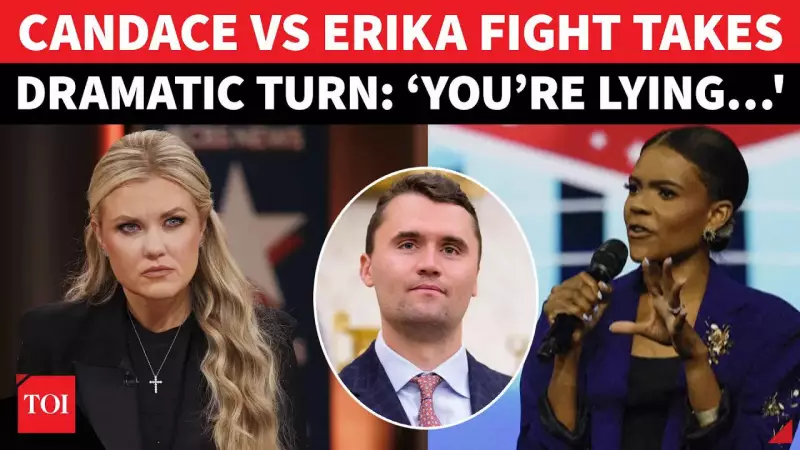
Conservative commentator Candace Owens has ignited a fierce controversy within right-wing circles. This follows her refusal to accept the official account of the killing of Turning Point USA founder Charlie Kirk, even after a lengthy, private meeting with his widow, Erika Kirk.
A Meeting That Deepened the Divide
The discussion between Owens and Erika Kirk lasted for approximately four and a half hours. Despite this extended conversation, Owens emerged unconvinced that the charged suspect acted alone. She has persistently raised questions about potential outside involvement in the high-profile case, suggesting there may be more to the story than what law enforcement has presented.
In stark contrast, Erika Kirk has publicly pushed back against these insinuations. She has urged trust in the ongoing investigation conducted by the authorities and has explicitly rejected conspiracy theories surrounding her husband's death. Her stance highlights a personal plea for privacy and respect during a period of immense grief.

Conservative Media Splits Over the Dispute
The public disagreement has created a significant rift among prominent conservative media figures. The debate, playing out extensively on social media and news platforms, centers on several key issues: accountability in reporting, the weight of official evidence versus speculation, and the paramount importance of respecting the wishes of the grieving family.
Supporters of Owens argue for rigorous questioning and skepticism of official narratives, a principle often championed in conservative commentary. However, critics accuse her of disrespecting the Kirk family's ordeal and potentially hindering the judicial process by promoting unverified claims.
Online Firestorm and Broader Implications
The incident, which came to light on December 18, 2025, has sparked intense online debate. It underscores the volatile nature of discourse within the media landscape, where personal convictions can clash sharply with calls for solidarity and sensitivity. The fallout from this episode continues to unfold, raising questions about the boundaries of commentary in the wake of personal tragedy.
As the situation develops, the core facts remain. A prominent founder was killed, a suspect is charged, and the widow seeks closure. Yet, the narrative around it has become a battleground, reflecting deeper divides on how tragic events should be discussed in the public sphere.