Chicago Schools Face Uncertainty as Teachers Union Pushes May Day Closure
A significant political standoff regarding whether Chicago Public Schools will remain operational on May 1 has created substantial uncertainty for more than 315,000 students and their families. The district administration and the Chicago Teachers Union remain deeply divided on the question of holding classes on International Workers' Day, commonly known as May Day.
Union Advocates for Cancellation to Support Protests
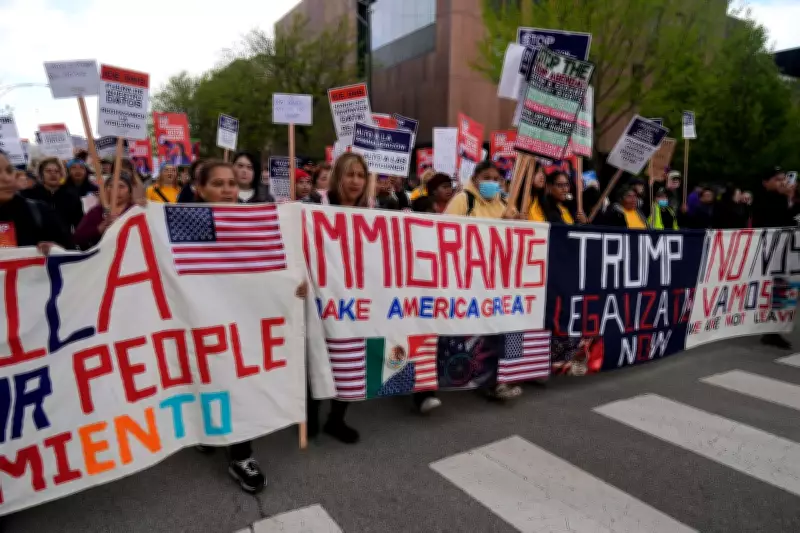
The Chicago Teachers Union has actively pushed for cancelling all classes to enable educators and students to participate in May Day protests occurring across the city. These demonstrations coincide with International Workers' Day, which historically draws large turnouts in Chicago, a city with a rich labor history.
In a formal statement, the union emphasized the importance of collective action. "What our students need... is educators, labor unions, and community groups standing together," the CTU declared, as reported by the Associated Press. The union has proposed converting May 1 into a professional development day for teachers, effectively replacing a scheduled session on June 5, which falls after the academic term concludes. Additionally, the CTU has filed an official grievance concerning this issue.

Across the United States, various labor groups are planning coordinated boycotts of work, shopping, and school attendance on May 1. In states such as North Carolina, unions have actively encouraged teachers to refrain from attending their classrooms on that day.
District Leadership Emphasizes Classroom Importance
Contrasting sharply with the union's position, Chicago Public Schools Chief Executive Officer Macquline King has stated that the district does not currently plan to cancel classes. "As a career educator, I believe every minute in the classroom is vital for our students," King asserted in a statement, according to the Associated Press. She noted that the final decision rests with the school board, which could still take a definitive call.
In a detailed memo to board members, King warned that potential disruptions could severely affect key academic timelines. "Disruptions would directly affect academic testing and key student milestones," she wrote. According to a district survey cited by AP, at least 113 schools had already scheduled important activities for May 1, including field trips, sports events, and Advanced Placement test-related work. Another 100 schools had significant events like prom and senior night planned for that date.
Parents Express Logistical and Educational Concerns
The ongoing lack of clarity has generated considerable logistical challenges for families, particularly those who depend on school schedules for reliable childcare and structured academic planning. Parents have also voiced concerns regarding the timing and educational purpose of the proposed protests.
Mariam Hafezi, a concerned parent, told the Associated Press that while fostering civic awareness is important, such demonstrations should not serve as a replacement for essential classroom instruction. "It is a teachable moment without them being outside of school," she remarked, highlighting the tension between activism and education.
Mayor Navigates a Delicate Political Position
The contentious issue has placed Mayor Brandon Johnson in a particularly difficult political position. Johnson, who was elected with substantial support from the teachers union, has publicly backed the May Day demonstrations. However, he has not provided a clear statement on whether schools should officially close for the day.
A spokesperson for the mayor indicated that the city administration would collaborate with all stakeholders to ensure the protests are "safe and meaningful." This debate unfolds amid broader, ongoing tensions between the mayor's office, the teachers union, and the school system, which include leadership changes and complex contract negotiations.

School Board Divided Ahead of Crucial Decision
The matter may ultimately be resolved by the Chicago school board, which is scheduled to convene on April 23. Chicago is currently in a transitional phase, moving toward a fully elected school board. The existing 21-member body, comprising both elected and appointed members, has experienced frequent disagreements on this and other issues.
Board member Jennifer Custer has voiced strong opposition to cancelling classes. "Calls to keep students out of school are reckless," she wrote on social media, according to AP reports. In contrast, Emma Lozano, an appointed board member and immigrant rights activist, has expressed support for allowing participation in the protests. "We don't just get educated in the classroom," she stated, as quoted by the Associated Press.
With no final decision yet announced, families, students, and school staff across Chicago remain in a state of uncertainty regarding whether classrooms will be open on May 1. The outcome of the upcoming board meeting will have immediate and significant implications for the entire school community.