US Educators Sue Over Immigration Enforcement Near Schools, Cite Student Fear
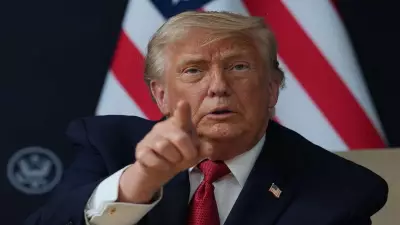
As the Trump administration expands immigration enforcement across the United States, educators nationwide are sharing alarming stories that have been included in recent court filings. Teachers describe students staying home due to rumors of raids, parents withdrawing children from school, and Immigration and Customs Enforcement officers detaining individuals near educational campuses.
Legal Challenge to Policy Reversal
The accounts form part of a significant lawsuit challenging a Trump administration decision to permit immigration enforcement actions in previously protected locations including schools, houses of worship, and medical facilities. The plaintiffs, comprising farmworker and teacher unions, churches, and preschool educators, filed the case in federal court in Eugene, Oregon. They argue that the policy reversal was arbitrary and capricious, lacking proper justification or consideration of consequences.
The End of Protected Areas
For more than three decades, federal guidance had restricted immigration arrests in what were designated as protected areas, including schools and churches. Over time, this guidance expanded to include hospitals, homeless shelters, and other essential service locations. Shortly after taking office, the Trump administration rescinded this longstanding policy through a brief memorandum advising officers to use what it termed a healthy dose of common sense when conducting operations near such sensitive locations.

Administration officials have defended the change, asserting that exempting schools and churches could enable criminals to evade enforcement. Officials have also stated that Immigration and Customs Enforcement does not directly target educational institutions. Despite these assurances, there have been multiple documented instances in recent months where agents have pursued or detained individuals on or near school property.
Testimony from Classrooms Across States
According to the Associated Press, educators from eighteen states submitted anonymous testimony describing the tangible impact of enforcement actions near their schools and health facilities. One middle school teacher reported that half of their students remained home following rumors of immigration activity in the vicinity. The following month, a student from that same school was detained at a bus stop.
In Chelsea, Massachusetts, teachers union president Kathryn Anderson stated that the disruption to learning has surpassed even that experienced during the COVID pandemic. Anderson explained that children of all backgrounds are being prevented from attending school due to the extremely real fear that either they or their family members will be separated. She added that helping students function within this climate of fear has become nearly impossible for educators.
In Chicago, agents released tear gas during an operation that affected a school playground. They later arrested a teacher inside her preschool during morning drop-off. The Department of Homeland Security stated that agents had attempted to stop the vehicle she was traveling in before she reached the school and that she barricaded herself inside, requiring officers to enter. She was subsequently released.
In Minneapolis, officers pursued a man onto a high school campus at the end of the school day, leading to a confrontation with bystanders. In Oregon, Immigration and Customs Enforcement agents attempted to arrest a man in a preschool parking lot after he dropped off his infant son.
Fear as an Administrative Consequence
Beyond these visible incidents, educators described more subtle consequences permeating school systems. A speech pathologist recounted meetings with immigrant parents who feared that signing documents for special education services might attract enforcement attention. A high school teacher reported that several students switched to virtual learning after a parent was detained at a bus stop. The virtual option is offered only in English, raising concerns that students who are still learning the language could fall significantly behind academically.

At another school, a student detained at a bus stop did not return to class after being released. When students now ask whether they can be arrested at school, one teacher wrote that they can no longer reassure them that campus is safe from ICE.
What Shifts Inside a School System
The legal question before the court concerns administrative procedure and executive authority. The educational question unfolding in districts across the country is more practical and immediate. When school attendance becomes a risk calculation, even for families with lawful status, learning shifts from the foreground to the background of daily concerns.
Schools have long operated on the assumption that certain civic spaces are insulated from enforcement to preserve access to education and health care. That insulation has now become substantially thinner. While the change is procedural on paper, the consequences are cumulative in reality.
Students will not register this shift in a single headline. Instead, it will appear in rising absenteeism rates, in parents reluctant to sign necessary forms, and in teachers unable to answer basic questions about safety with certainty. Over time, these small adjustments can fundamentally reshape who shows up to school, who withdraws from the system, and who remains within reach of public education.