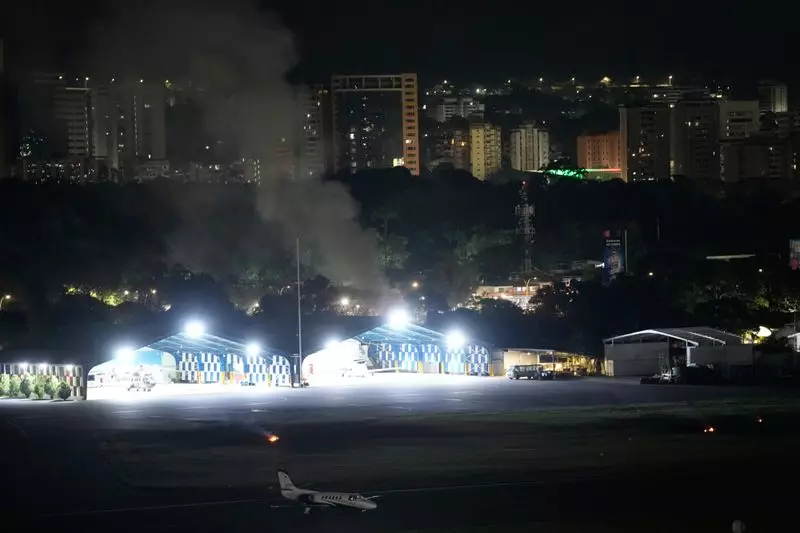
Residents of Venezuela's capital, Caracas, were jolted by a series of alarming incidents on a recent evening, with reports of at least seven explosions and sightings of low-flying aircraft creating panic and confusion across the city.
Panic in the Night Sky
The unsettling events unfolded after sunset. Social media platforms were quickly flooded with videos and messages from citizens reporting loud blasts and the presence of aircraft flying at unusually low altitudes over various districts. The sounds of explosions were heard in several populous areas, including El Valle, La Candelaria, and near the iconic El Ávila mountain. The combination of these events triggered immediate concern and speculation among the populace.
The United States Embassy in Venezuela swiftly issued a security alert for its personnel, advising them to avoid the El Valle neighborhood and to shelter in place. This official warning added a layer of gravity to the unfolding situation, indicating that diplomatic missions were taking the reports seriously.

Official Response and Investigation
Venezuelan authorities moved quickly to address the growing alarm. The Strategic Operational Command of the National Bolivarian Armed Forces (CEOFANB) released a statement to clarify the situation. They attributed the loud noises to a routine, scheduled detonation of explosives conducted by the state-run mining company, CVG, in the nearby state of Bolívar.
Regarding the low-flying aircraft, military officials stated that the sounds were caused by supersonic flights of Venezuelan Air Force jets. They emphasized that these were part of a controlled operational activity intended to "guarantee the inviolability of the national airspace." The government's message was clear: these were planned national security operations, not an external threat or an attack.
Context and Public Reaction
This incident occurs within a complex political and economic climate in Venezuela. The administration of President Nicolás Maduro frequently conducts military exercises and has repeatedly warned of potential external threats. For many citizens, however, the sudden explosions and military activity, even if explained, cause significant distress.
The public reaction was a mix of fear, skepticism, and resignation. While some accepted the official explanation, others on social media expressed doubts, questioning the timing and the nature of the operations. The event highlights the tense atmosphere in the capital, where such incidents can quickly escalate public anxiety.
As of now, no casualties or damage to infrastructure have been reported stemming directly from the explosions or the jet flights. The situation appears to have de-escalated following the military's communication, but the event serves as a stark reminder of the heightened state of alert in the region.