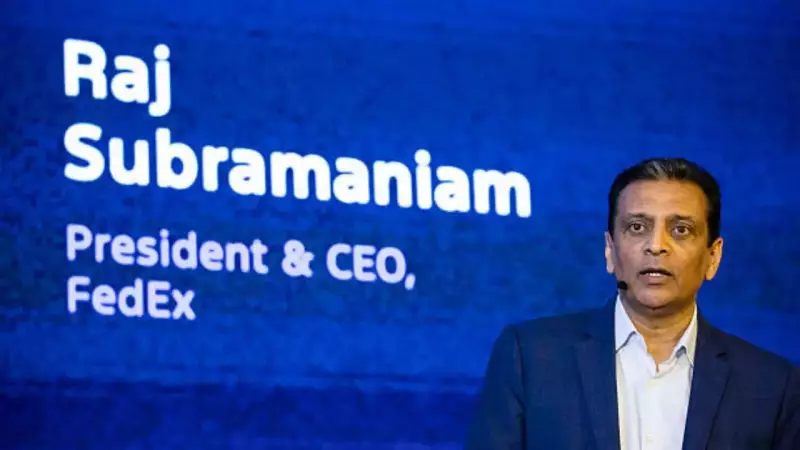
The future of the H-1B visa program and the foreign professionals it brings to the United States has become a hot-button issue globally. With the start of former President Donald Trump's second term, policies targeting illegal migration and the H-1B visa have intensified, creating uncertainty for both American companies and the workers dependent on these visas. Amid this climate, a report highlighting FedEx's hiring practices has ignited a firestorm, directly implicating its Indian-origin CEO, Rajesh Subramaniam.
FedEx's Hiring Shift: A Response to a Major Government Contract
Official documents and data from the US Citizenship and Immigration Services reveal a significant shift in FedEx's employment strategy. This change followed a pivotal moment in late December 2022, when the US Transportation Command awarded FedEx a massive contract as part of the Next Generation Delivery Service-2 initiative. The contract, valued at an estimated $2.24 billion, commenced its first phase on April 1, 2023, and is set to run until September 30, 2026.
In response to this business need, FedEx's hiring patterns transformed. According to The Dallas Express, in 2022, the company had around 20 approved H-1B employees. Over the next three years, this number surged dramatically to approximately 500, with notable increases scheduled for 2024 and 2025. A company spokesperson stated that hires are based on business needs and required skillsets, emphasizing FedEx's commitment to complying with federal immigration laws.

Social Media Storm Targets CEO Raj Subramaniam
The revelation that FedEx increased its hiring of foreign workers while decreasing American positions in certain parts of the US has led to severe criticism on social media platforms, particularly targeting CEO Rajesh (Raj) Subramaniam. The backlash is especially pronounced given the current political environment, where many companies are reportedly reducing H-1B hires to avoid new, costly fees.
Angry users on platforms like X (formerly Twitter) have accused the CEO of favoring foreign labor. One user wrote, "FedEx CEO. Indian nepotism never fails. They will always replace you," while another claimed, "Indian CEO takes over, fires Americans, hires H1Bs, then ships jobs to India. Like clockwork." Calls to cancel visas and dismiss the government contract have also proliferated online.
The Data Behind the Controversy
Further scrutiny of the H-1B application data adds layers to the situation. Reports indicate that some of FedEx's visa applications were for commercial and technical roles in Texas, offering salaries between $100,000 and $115,000. Notably, the listed start dates for these positions coincided with layoffs in the same geographic areas, fueling allegations that foreign workers were being brought in to replace American employees. It is important to note, however, that not every approved visa application results in an actual hire.
The controversy places FedEx and its CEO at the center of a heated national debate on immigration, outsourcing, and corporate responsibility. For the many Indian professionals and other foreign workers in the US on H-1B visas, who are often sole earners for their families, such policies and the resulting public sentiment contribute to an atmosphere of job insecurity and instability.