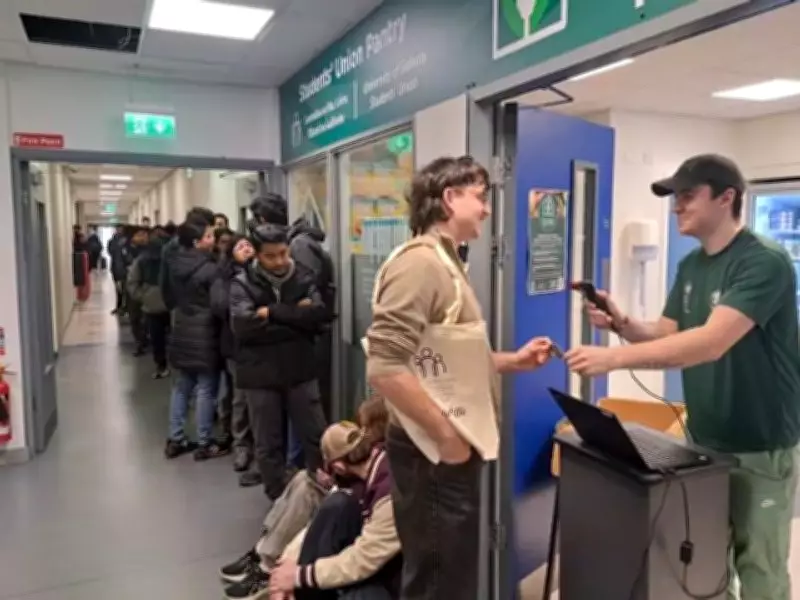
Food Bank Queue Photo Ignites Racist Online Storm Targeting Indian Community in Ireland
A single photograph capturing a line of people waiting at a food bank in Ireland has unexpectedly become the catalyst for a wave of racist online attacks directed specifically at individuals of Indian origin. The incident, which has rapidly gained traction on social media platforms, underscores a disturbing trend of xenophobia and highlights the complex social tensions surrounding immigration and resource distribution in contemporary Irish society.
Viral Image Fuels Hateful Discourse
The controversial image, shared widely across various online forums and social media channels, depicts a queue at a community food bank—a scene increasingly common amid economic pressures. However, the focus of the subsequent vitriol was not on the broader issue of food insecurity but was narrowly and maliciously aimed at Indian nationals and people of Indian descent visible in the picture. Online commentators leveraged the photo to propagate stereotypes and launch abusive rants, accusing the Indian community of unfairly exploiting social welfare resources.
This digital backlash has involved derogatory language, racial slurs, and unfounded generalizations, creating a hostile environment for the Indian diaspora in Ireland. Community leaders have expressed deep concern, noting that such attacks not only cause emotional distress but also risk inflaming real-world divisions.

Context of Immigration and Social Strain
The incident occurs against a backdrop of significant demographic shifts in Ireland. The country has experienced a notable increase in immigration in recent years, with a substantial number of newcomers arriving from India for work, study, and family reunification. While this diversity has enriched Irish culture and contributed to the economy, it has also, in some quarters, led to perceptions of competition for jobs, housing, and public services.
Food banks, which provide essential support to those facing financial hardship, have become a visible symbol of economic strain. The targeting of Indians in this context reflects a dangerous scapegoating narrative, where complex socioeconomic challenges are wrongly attributed to specific ethnic groups.
Community Response and Calls for Action
In response to the online abuse, representatives from the Indian community and anti-racism organizations in Ireland have condemned the attacks in the strongest terms. They emphasize that such behavior is not only morally reprehensible but also contradicts the values of inclusivity and respect that Ireland strives to uphold. Advocates are calling for:
- Increased moderation by social media companies to swiftly remove hateful content and ban perpetrators.
- Public awareness campaigns to educate on the positive contributions of immigrants and combat prejudice.
- Support systems for victims of online racism, including legal and psychological assistance.
Furthermore, there is a push for political leaders and public figures to speak out against such racism, reinforcing that discrimination has no place in Irish society. The incident serves as a stark reminder of the urgent need to address both online hate speech and the underlying social tensions that fuel it.
Broader Implications for Diaspora Relations
This episode is not an isolated one; it reflects a global pattern where economic anxieties can manifest as racial hostility toward immigrant communities. For the Indian diaspora in Ireland—a group that includes professionals, students, and families—the attacks are a painful reminder of the vulnerabilities they can face despite their contributions.
Moving forward, fostering dialogue between communities, promoting intercultural understanding, and ensuring equitable access to resources will be crucial in preventing similar incidents. The hope is that this negative event can spur positive action, leading to a more cohesive and compassionate society where diversity is celebrated, not attacked.