

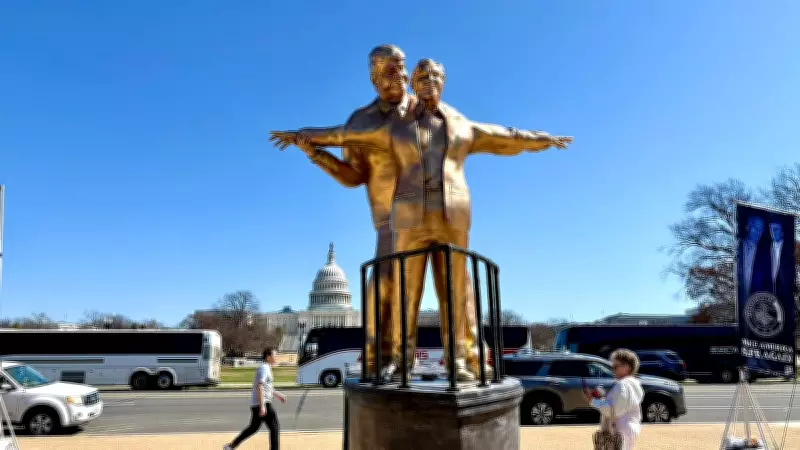
Gold-Painted Trump-Epstein Statue Erected in Washington, Sparks Widespread Controversy
A highly provocative and gold-painted statue depicting former United States President Donald Trump alongside the late financier Jeffrey Epstein has been installed in Washington, D.C., igniting a firestorm of public debate and political commentary. The artwork, which appeared unexpectedly in a public space, portrays the two figures in a manner that has drawn sharp reactions from various quarters.
Details of the Controversial Art Installation
The statue features lifelike representations of Trump and Epstein, both coated in a striking gold finish. It is designed to evoke strong emotions and has quickly become a focal point for discussions about art, politics, and historical associations. The installation's sudden appearance has raised questions about its origins and intent, with many speculating on the message it aims to convey.
Public and Political Reactions

Since its unveiling, the statue has elicited mixed responses. Supporters of Trump have condemned it as a disrespectful and politically motivated stunt, while critics view it as a powerful statement on the connections between powerful figures and controversial individuals. Political analysts note that the artwork taps into ongoing debates about Trump's past associations and the broader implications of the Epstein case.
Broader Implications and Cultural Impact
This incident highlights the intersection of art and politics in modern society, where public installations can serve as catalysts for national conversations. The statue's presence in Washington, a hub of political activity, amplifies its impact, drawing attention from media outlets and social media platforms alike.
Artistic Expression or Political Provocation?
Some argue that the statue is a form of artistic expression, protected under free speech, while others see it as a deliberate provocation meant to stir controversy. Regardless of perspective, it has succeeded in capturing public interest and sparking dialogue on issues of accountability and representation in art.
The installation also raises questions about the role of public art in shaping political narratives and how such works can influence public perception of historical events and figures.
Conclusion
The gold-painted Trump-Epstein statue in Washington stands as a contentious symbol in today's polarized political landscape. Its emergence underscores the power of art to challenge norms and provoke thought, even as it divides opinions. As discussions continue, this statue remains a vivid reminder of the complex interplay between creativity, politics, and public discourse in the United States.






