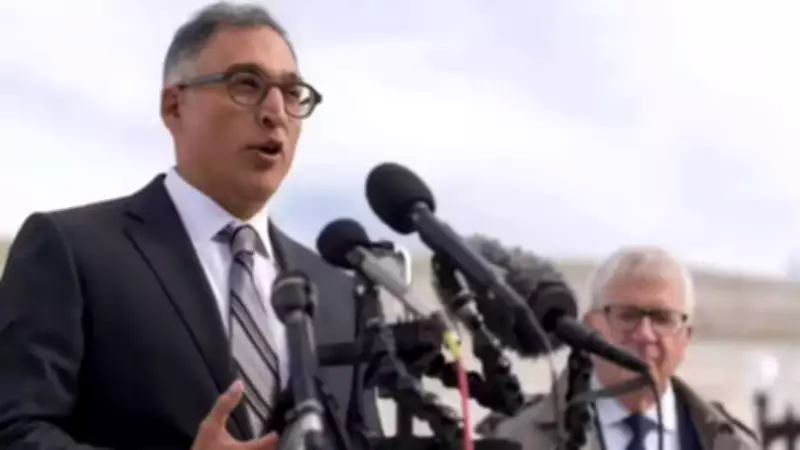
Gita Gopinath Endorses Neal Katyal's Legal Critique of Trump's Global Tariff Policy
In a significant development, former International Monetary Fund chief economist Gita Gopinath has publicly supported Indian-American attorney Neal Katyal's questioning of US President Donald Trump's decision to impose a sweeping 15 percent global tariff. This endorsement reinforces growing concerns that the Trump administration's legal justification for the tariffs may not withstand scrutiny, while also highlighting crucial economic distinctions central to the ongoing legal debate.
Economic Distinctions and Legal Arguments
Responding to Katyal's post on social media platform X, Gopinath backed his argument that trade deficits and balance-of-payments deficits are fundamentally different concepts. This distinction is particularly important in the legal challenge against the administration's use of Section 122 of the Trade Act of 1974 to justify the broad tariffs.
Katyal had earlier criticized Trump's move, asserting that the president cannot bypass Congress to impose such extensive tariffs. He pointed out that the US Department of Justice had previously argued before the Supreme Court that Section 122 does not clearly apply in situations driven primarily by trade deficits.

"Seems hard for the President to rely on the 15 percent statute (Section 122) when his DOJ in our case told the Court the opposite," Katyal wrote. He emphasized that if Trump believes such tariffs are justified, "he should do the American thing and go to Congress," stressing that the Constitution gives lawmakers—not the president—primary authority over taxation matters.
Katyal's Recent Supreme Court Victory Against Trump Tariffs
Neal Katyal recently played a pivotal role in a major Supreme Court ruling that struck down most of Trump's earlier tariffs imposed under the International Emergency Economic Powers Act. Representing a coalition of small businesses and trade groups, Katyal successfully argued that the administration had exceeded its legal authority.
In a decisive 6-3 verdict, the court held that:
- The emergency powers law did not grant the president sweeping authority to impose broad tariffs
- The power to levy taxes rests primarily with Congress, not the executive branch
This ruling marked a significant constitutional setback for Trump's trade measures and substantially curtailed the use of emergency powers to justify tariffs, establishing important legal precedents for future trade policy challenges.
Background on Neal Katyal
Born in Chicago to Indian immigrant parents, Neal Katyal has emerged as one of the most prominent Indian-origin lawyers in the United States. His impressive credentials include:
- Graduation from Dartmouth College and Yale Law School
- Clerkship for Justice Stephen Breyer of the Supreme Court
- Service as Acting Solicitor General under President Barack Obama
With more than 50 cases argued before the Supreme Court, Katyal currently serves as a partner at Milbank LLP and a professor at Georgetown University Law Center. He is widely recognized for his expertise in constitutional law and has handled numerous high-profile cases involving:
- Executive power and presidential authority
- Civil rights and liberties
- National security matters
- International trade law
The combination of Gita Gopinath's economic expertise and Neal Katyal's legal acumen creates a formidable challenge to the Trump administration's tariff policies, highlighting both the economic misunderstandings and potential constitutional overreach in the current approach to global trade.