Former US President Donald Trump's recent claim about ordering military strikes against drug cartel boats has ignited a fresh debate on presidential authority. The assertion, made during a campaign speech, was robustly defended by Fox News host Pete Hegseth, who argued that a commander-in-chief possesses broad powers to use force.
Hegseth's Defense of Executive Authority
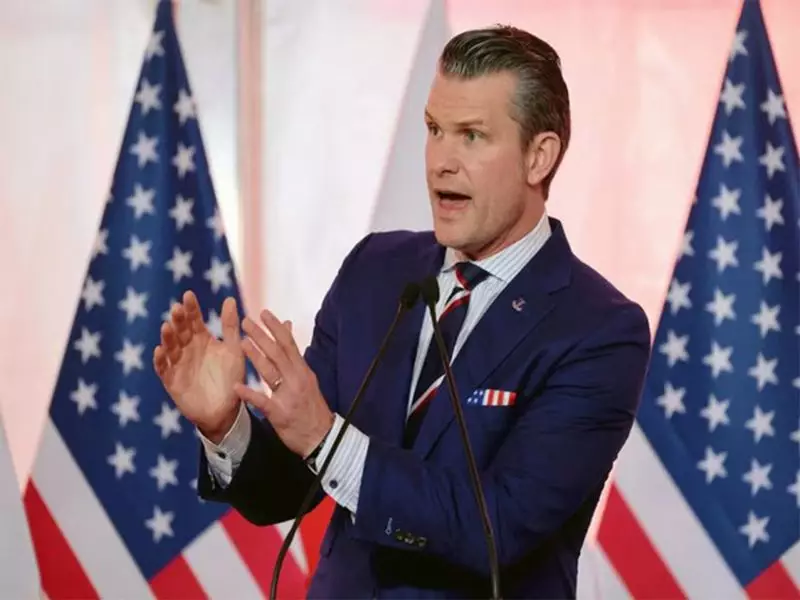
During a segment on Fox News, Pete Hegseth directly addressed the controversy surrounding Trump's statement. Hegseth contended that the constitutional framework grants a sitting president significant leeway in matters of national security and immediate threat response. "A president can use force as he sees fit," Hegseth stated emphatically, framing the hypothetical action within the scope of defending the nation's borders from narcotics trafficking and associated violence.
The discussion was prompted by Trump's remarks at a rally, where he alleged he had instructed the US military to target and destroy boats used by drug cartels. While no independent verification or official records confirming such strikes have emerged, the claim has become a focal point for discussions on the limits of executive power and border security strategies.

The Context of Trump's Claim and Political Reactions
Trump's narrative appears to be part of his broader hardline stance on border control and the war on drugs, themes central to his 2024 presidential campaign. By invoking direct military action against cartels, he positions himself as a leader willing to take unprecedented and aggressive steps, a contrast he frequently draws with the current Biden administration.
Political reactions have been sharply divided. Supporters view the claimed approach as a necessary and strong response to a persistent crisis. Critics, however, express deep concern over the potential implications of a president unilaterally ordering military strikes without clear congressional authorization or a formal declaration of war, especially within or near the territory of a neighboring sovereign nation like Mexico.
Broader Implications for Policy and Power
This incident raises profound questions about the interpretation of presidential war powers. Legal scholars often debate the boundaries of the Authorization for Use of Military Force (AUMF) and the War Powers Resolution, particularly in conflicts not against traditional nation-states but against transnational criminal organizations.
Hegseth's defense underscores a perspective that prioritizes executive decisiveness in the face of threats deemed imminent. The debate touches on core issues of national sovereignty, international law, and the balance of power within the US government. As the 2024 election cycle intensifies, such discussions about the scope of presidential authority, especially concerning border and security policy, are likely to remain at the forefront of political discourse.
Ultimately, whether a historical account or a campaign rhetoric, Trump's claim and its subsequent defense have successfully shifted attention to his preferred themes of border security and strong executive action, setting the stage for continued debate on how far a president can go in using military force.