Hungary's Pivotal Election: Economic Frustration and Corruption Allegations Threaten Orban's Rule
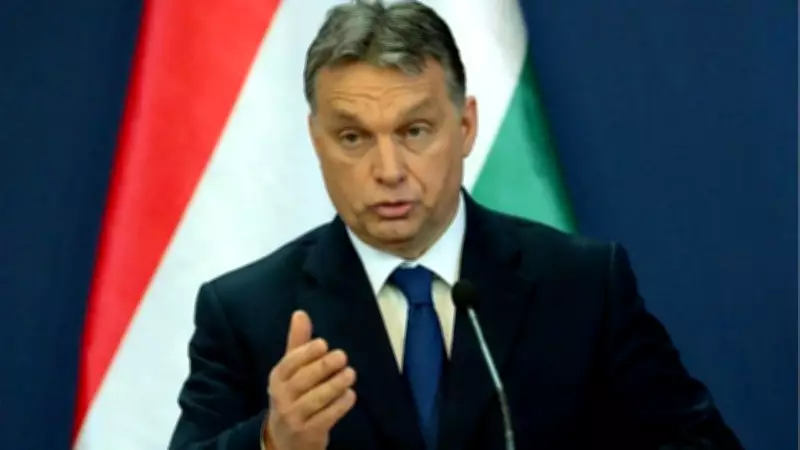
In a nation labeled by Transparency International as the European Union's most corrupt, Hungarian Prime Minister Viktor Orban faces a critical general election on April 12 that could terminate his 16-year tenure. While Orban's officially declared wealth appears modest—comprising savings and a jointly owned villa in Budapest—voters increasingly suspect otherwise, with public anger fueled by sluggish growth, high inflation, and deteriorating public services.
Public Outcry Over "Feudalism" and Misused Funds
The palpable frustration among Hungarians stems from perceptions that Orban's inner circle has amassed significant wealth at the public's expense. "It's our money, not theirs. But they are spending it as if they were the sole owners," declared Gabor Szebenyi, an 81-year-old retired history teacher, at an opposition rally. He denounced what he termed a "feudalism" entrenched in this Central European country of nearly 10 million people.
Independent lawmaker Akos Hadhazy, a leading anti-corruption crusader, revealed that graft has drained approximately 2.84 billion euros ($3.27 billion) annually from state coffers since 2016. "These are not isolated cases—this is simply the way the system is functioning," Hadhazy emphasized, highlighting systemic issues in public procurement.

Orban's Family and Associates Under Scrutiny
Despite Orban's claims of modest living, several family members have experienced dramatic wealth accumulation since his 2010 return to power. His 85-year-old father, Gyozo Orban, owns multiple building material companies and the historic Hatvanpuszta estate, rebuilt into a luxurious manor worth hundreds of millions of dollars. Drone footage from independent media shows the sprawling domain, protected by high walls near Orban's home village, featuring two swimming pools, a wildlife park, and extensive outbuildings.
"In reality, the father is merely Viktor Orban's frontman," asserted Hadhazy, suggesting deeper connections. Orban's son-in-law, Istvan Tiborcz, became one of Hungary's most influential entrepreneurs through public lighting contracts awarded to his former company, Elios. These deals, partly financed by the EU, were halted after the EU anti-fraud office OLAF identified serious irregularities, leading Tiborcz to shift focus to real estate and tourism.
Furthermore, Orban's childhood friend Lorinc Meszaros, a former plumber, has risen to become Hungary's wealthiest individual, with a net worth of $4.8 billion according to Forbes magazine. His empire spans construction, energy, banking, and media firms, largely thriving on public contracts.
Systemic Corruption in Public Procurement
A construction contractor near Budapest, speaking anonymously, described a rigged system where public tenders are often predetermined. "On paper there is competition, but in fact the winner is always known in advance," he explained, noting his three decades in the sector. He added that smaller businesses at the bottom of the chain frequently face delayed payments, sometimes for months, while those in power enjoy luxurious lifestyles and private jet travel. "I'm so angry," he confessed, considering selling his machinery due to the struggle to survive.
Transparency International's Corruption Perceptions Index ranks Hungary alongside Bulgaria as the EU's most corrupt, citing systemic risks in public procurement and limited competition for contracts constituting five percent of Hungary's GDP. The government has rejected this ranking, insisting compliance with EU standards, but the EU has frozen 19 billion euros ($22 billion) in funds over persistent corruption and rule-of-law concerns.
Political Repercussions and Opposition Promises
Political analyst Zoltan Ranschburg of the Republikon think tank noted that the government's communication strategy faltered as economic conditions worsened. "The government's communication machine worked well as long as our economic situation remained relatively good," he stated, but added that this has not been the case for years.

Opposition leader Peter Magyar, Orban's primary rival in the upcoming election, has pledged to recover the frozen EU funds if elected and to investigate the wealth accumulation of current leaders and their families. This promise resonates with a populace eager for accountability and change, setting the stage for a potentially transformative vote on April 12.