Indian-American Resident Speaks Out Against Anti-Immigrant Sentiment in Frisco
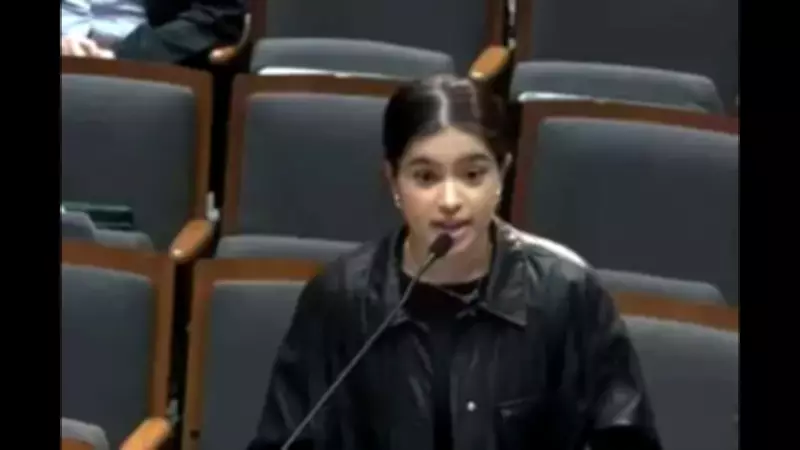
As Frisco City Council meetings in Texas have increasingly become platforms for expressing anger toward H-1B visa holders and the Indian community, one Indian-origin resident is pushing back against what she describes as a narrative built on misinformation. Neha Suratran, who has lived in Texas since 2016, delivered a powerful speech countering the hostile rhetoric that has dominated recent council sessions.
Challenging the False Narrative
Neha Suratran emphasized that Frisco remains one of America's safest cities precisely because of its diversity, not despite it. "Frisco's safety and prosperity exist alongside our diverse communities, including the Indian-American population," she stated during her address. The video of her speech has since gained significant traction across various social media platforms, resonating with many who feel misrepresented.
Suratran directly addressed the claims being made about H-1B visa fraud in Frisco, pointing out that there are no verified reports of such fraud in the city. She further noted the jurisdictional limitations, stating, "The Frisco City Council isn't even the appropriate authority to address H-1B visa matters, which fall under federal immigration jurisdiction."

The Motivation Behind the Rhetoric
According to Suratran, certain activists have deliberately chosen city council meetings as their stage to discuss the H-1B program primarily to spread hatred. "They're targeting this forum because they fear people who look different from them," she asserted. She criticized how many individuals are forming strong opinions based solely on unverified information circulating in group chats and viral social media posts, rather than seeking factual accuracy.
Explaining the H-1B Visa Reality
Suratran provided a detailed explanation of the H-1B visa program to counter misconceptions:
- Specialized Requirements: Applicants must have a job offer in specialized fields like technology or medicine
- Educational Standards: A bachelor's degree or higher education is mandatory
- Labor Protections: Employers must prove they aren't hiring cheap foreign labor and must pay the same salary as they would to U.S. citizens
"This is a selective, competitive, and highly regulated system," Suratran emphasized. "Contrary to popular belief, it's not an easy pathway to employment in the United States."
The Economic Imperative
Suratran highlighted the crucial role H-1B visa holders play in the American economy, particularly in STEM fields. "If we stop H-1B visas, we risk pushing away essential talent," she warned. She pointed to educational trends showing that U.S. students aren't pursuing STEM or machine learning courses in sufficient numbers at universities, while foreign students in these programs outnumber their American counterparts.
Addressing Community Stereotypes
The Indian-American resident also challenged the emerging narrative of an "Indian takeover" that has surfaced during council meetings. She presented data showing that the Indian community in America typically exhibits:
- Higher educational attainment
- Greater income levels
- Lower crime rates compared to national averages
"Despite these positive contributions, our community faces vilification in these discussions," Suratran noted. She added that Hindu Indian-Americans actively participate in American cultural traditions, celebrating holidays like Christmas and Thanksgiving, while Hinduism itself doesn't emphasize conversion practices.
The ongoing situation in Frisco reflects broader national conversations about immigration, diversity, and community integration in American cities experiencing demographic changes.