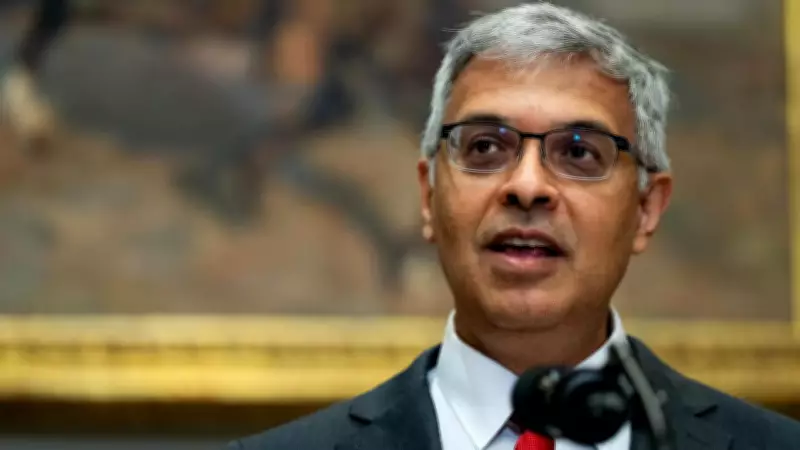
Indian-American Dr. Jay Bhattacharya Appointed to Lead CDC by President Trump
In a significant consolidation of federal health leadership, US President Donald Trump has appointed Indian-American Dr. Jay Bhattacharya, the current Director of the National Institutes of Health (NIH), to also lead the Centers for Disease Control and Prevention (CDC). This move represents the first time any individual has simultaneously headed the nation's premier medical research agency and its primary public health agency, marking an unprecedented step in US public health governance amid ongoing turmoil within scientific institutions.
White House Rationale and Leadership Transition
The White House has framed this decision as a necessary measure to synchronize federal health policy. Administration officials suggest that the dual-role strategy is designed to bridge the gap between biomedical research and public health implementation, aiming for more cohesive and efficient governance. Dr. Bhattacharya replaces Jim O'Neill, who is slated to lead the National Science Foundation (NSF) after its director, Dr. Sethuraman Panchanathan, resigned following significant funding cuts.
Background and Career of Dr. Jay Bhattacharya
Dr. Jayanta "Jay" Bhattacharya, 57, is a physician and health economist with a distinguished background spanning decades at Stanford University. Born in Kolkata, India, he immigrated to the United States as a child and eventually earned four degrees from Stanford, including an MD and a Ph.D. in economics. He became a tenured professor at Stanford, focusing his research on health economics and vulnerable populations. His work has emphasized critical issues such as population aging, chronic diseases, and the impacts of government programs on public well-being.

Rise to Political Prominence
Dr. Bhattacharya's entry into the political spotlight began in 2020 when, as a co-author of the Great Barrington Declaration, he argued against universal COVID-19 lockdowns. Instead, he advocated for "focused protection" of the elderly while allowing younger and healthier individuals to live normally. His opposition to vaccine mandates and perceived censorship by officials like Dr. Anthony Fauci propelled him into the MAGA orbit. He has since framed his views as a fight against "politicized science," aligning with President Trump's agenda to reform institutions and restore trust in public health.
This stance placed him in direct opposition to the public health establishment of the time, leading former NIH Director Francis Collins to label him a "fringe epidemiologist." The professional criticism cemented his status within the MAGA movement, which viewed him as a courageous dissenter against what they term "medical overreach."
Challenges and Opportunities Ahead
Now positioned as America's top health official, Dr. Bhattacharya faces a daunting task. While he has expressed support for standard childhood vaccinations during Senate hearings, he takes over a CDC that has seen its vaccine schedules aggressively reviewed and several mandates rolled back under Health Secretary Robert Kennedy. Supporters hail his appointment as a step toward decentralizing power, boosting innovative grants, and addressing chronic illnesses like obesity and autism through Trump's "Make America Healthy Again" initiatives, shifting from a more expansive global focus on infectious diseases.
However, critics fear this move advances Kennedy's vaccine-skeptic agenda, potentially exacerbating outbreaks of preventable diseases amid grant cuts, staff layoffs, and policy rollbacks at both agencies. They also point to the logistical challenges he will face, managing the $50 billion NIH budget in Bethesda, Maryland, outside Washington DC, while overseeing the 10,000-plus employees of the Atlanta-based CDC, which operates on a $10 billion budget. Dr. Bhattacharya's tenure at the NIH has already seen budget freezes and an exodus of experts, raising alarms about divided leadership potentially hobbling responses to emerging health threats.

Implications for the American Public
For the average American, this leadership shift likely signals a move toward reduced federal mandates, with a continued emphasis on "Medical Freedom" and individual choice. The consolidation of power under Dr. Bhattacharya could reshape public health strategies, balancing innovation with concerns over institutional integrity and public safety.