Intel Warned Against Iran Attack, But Trump Pushed US Into War: Shocking Report
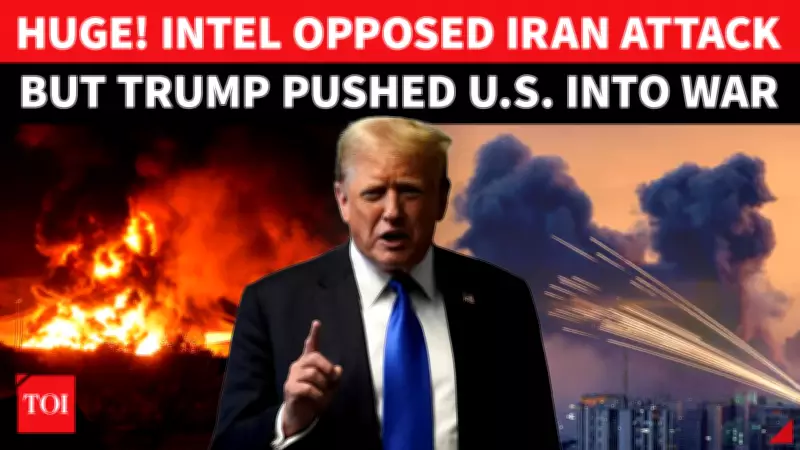
New Delhi, April 7, 2026: The escalating conflict between the United States and Iran has raised a critical question that is now coming into sharp focus: was this an intelligence failure, or a deliberate failure to act on intelligence that was already available? A shocking new report reveals that well before the first US military strike, intelligence assessments had clearly outlined how Iran was likely to respond to any American aggression.
Intelligence Predictions vs. Policy Decisions
According to multiple sources, US intelligence agencies had provided detailed assessments predicting Iran's response strategy. These assessments indicated that Iran would likely avoid direct nuclear escalation and instead focus on regional retaliation. The predicted targets included US military bases in the Middle East, Gulf allies of the United States, and critical energy chokepoints such as the strategically vital Strait of Hormuz.
"The intelligence was clear and comprehensive," said one former intelligence official speaking on condition of anonymity. "We knew exactly how Iran would react, and we communicated this to policymakers at the highest levels."

Current Conflict Mirrors Intelligence Predictions
As events now stand, the intelligence predictions have proven remarkably accurate. Iran has launched sustained missile and drone attacks across the region, significantly disrupting regional stability and placing immense pressure on global energy flows. The disruption to oil shipments through the Strait of Hormuz has already caused significant volatility in global energy markets.
Despite these accurate predictions, the public justification for the war centered on claims that Iran posed an imminent strategic threat, including nuclear capabilities that intelligence officials had assessed were years away from becoming operational. This significant gap between intelligence assessments and policy decisions has become increasingly visible as the conflict progresses.
Different from Previous Intelligence Failures
In previous conflicts, flawed intelligence was often blamed for strategic missteps. However, in this case, the dynamic appears fundamentally different. The intelligence appears to have been accurate and comprehensive, but was either ignored or overridden by political decision-makers.
This raises serious questions about the relationship between intelligence agencies and political leadership during the Trump administration. The report suggests that intelligence warnings about the consequences of attacking Iran were clear, but the decision to proceed with military strikes was made despite these warnings.
Broader Implications for US Foreign Policy
The revelation has significant implications for understanding the current conflict's origins and the decision-making processes that led to it. It suggests that the escalation might have been avoidable if intelligence assessments had been heeded rather than dismissed.
The report comes amid ongoing military engagements between US and Iranian forces, with both sides sustaining significant losses. The conflict has expanded beyond initial expectations, drawing in regional allies and creating instability across the Middle East.
As the conflict continues to unfold, questions about the decision to ignore intelligence warnings are likely to become more prominent in both domestic and international discussions about the war's justification and conduct.