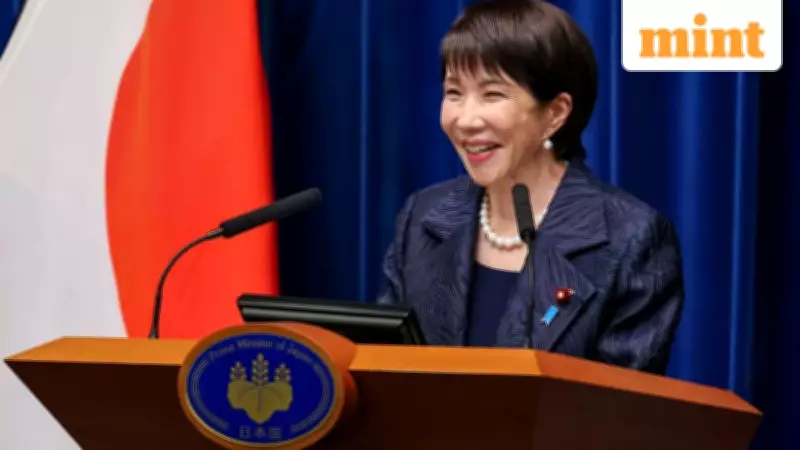
Japan's Political Revolution: Sanae Takaichi's Leadership Sparks Meiji-Style Revival
In a stunning political turnaround, Japanese Prime Minister Sanae Takaichi has emerged as a transformative figure, drawing comparisons to the historic Meiji Restoration as she leads the nation through unprecedented changes. Her leadership style, marked by bold decisions and charismatic appeal, has captured the imagination of both domestic and international observers.
A Historic Electoral Mandate
Prime Minister Takaichi achieved what no Japanese leader has accomplished since World War II: securing a two-thirds parliamentary majority for her Liberal Democratic Party. This remarkable victory came just months after she assumed power through an internal party vote in October, initially lacking broad popular support. Her decision to call a snap election in January proved politically astute, capitalizing on rising approval ratings that followed her firm stance on international issues.
The 64-year-old leader's approach to governance represents a dramatic departure from Japan's traditional political establishment. In a matter of months, she has effectively sidelined the old guard of male politicians, establishing control reminiscent of how Indira Gandhi consolidated power within India's Congress Party in 1969. Her connection with younger voters has been particularly noteworthy, with approval ratings reaching 90% among those under 30 years old.

Geopolitical Boldness and Domestic Challenges
Takaichi's foreign policy positions have demonstrated remarkable clarity and conviction. When questioned in parliament about potential Chinese aggression toward Taiwan, she unequivocally stated Japan would intervene if necessary. This forthright declaration, while controversial, resonated with the Japanese public and boosted her political standing. Beijing's subsequent attempts at economic pressure through restrictions on seafood imports and rare earth exports only strengthened Takaichi's position as she refused to soften her stance.
Domestically, the prime minister faces significant economic challenges. Her government must navigate complex fiscal waters while addressing inflation concerns and managing Japan's substantial public debt, which remains the highest among developed nations as a percentage of GDP. Takaichi's proposal to suspend the 8% consumption tax on food for several years could stimulate broader consumption but would simultaneously reduce tax revenue by approximately 6% at a time of fiscal uncertainty.
Economic Transformation and Social Change
Beyond politics, Japan is experiencing profound societal shifts that parallel the political transformation. Major corporations are increasingly prioritizing ability over seniority in promotions and offering competitive compensation to attract external talent. Financial institutions are addressing long-standing structural issues by forcing unproductive "zombie companies" to close, while the country has been addressing demographic challenges through immigration, granting over 1,200 work visas daily in recent years.
Women's participation in the workforce continues to expand significantly, contributing to broader economic revitalization. These combined developments represent what many analysts describe as a 21st-century equivalent of the Meiji Restoration—a comprehensive national renewal affecting political, economic, and social spheres simultaneously.
Cultural Influence and International Relations
Takaichi's cultural impact extends beyond traditional politics. Her fashion choices, including an unremarkable black handbag that has developed a nine-month waiting list, demonstrate her influence on consumer trends. The viral photograph of her playing drums alongside South Korean President Lee Jae Myung symbolized improved relations between two nations with historically strained ties, while her ability to maintain stable relations with unpredictable international leaders like former U.S. President Donald Trump showcases diplomatic skill.
As Takaichi begins her full parliamentary term—unlike her immediate predecessors who served shorter tenures—she faces the complex task of establishing a functional working relationship with Chinese President Xi Jinping. Beijing's initial attempts to intimidate the Japanese leader backfired spectacularly, necessitating a revised diplomatic approach from China.

Monetary Policy Tensions and Future Prospects
A potential conflict looms between the prime minister's expansionary fiscal policies and the Bank of Japan's inflation-control measures. Takaichi's characterization of interest rate increases as "stupid" represents one of her few missteps since taking office, highlighting the tension between political priorities and monetary policy objectives. With foreign investors now holding more than half of Japan's long-term bonds—a significant increase from pre-pandemic levels—international market reactions will play an increasingly important role in shaping economic policy.
The convergence of political transformation, economic restructuring, and social evolution under Takaichi's leadership suggests Japan may be entering its most significant period of change since the Meiji era. As corporate Japan embraces merit-based advancement and addresses structural inefficiencies, and as the nation navigates complex geopolitical relationships while managing fiscal challenges, the prime minister's unique combination of traditional political skill and contemporary cultural appeal positions her as a potentially historic figure in Japan's ongoing national story.