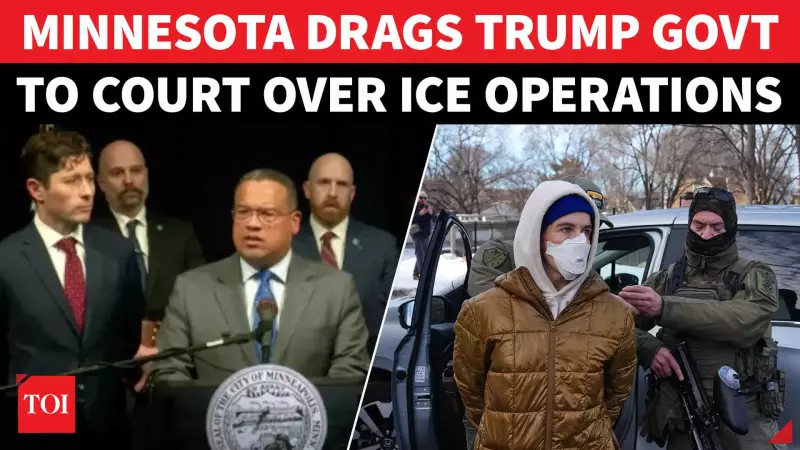
Minnesota Takes Legal Action Against Federal Immigration Crackdown
The state of Minnesota has initiated a significant legal challenge against the Trump administration. This lawsuit aims to stop a major immigration enforcement operation. The action follows a deadly shooting incident in Minneapolis involving a federal officer.
Lawsuit Targets Homeland Security Tactics
State officials, along with leaders from Minneapolis and Saint Paul, filed the complaint in federal court. They accuse the Department of Homeland Security of using aggressive and unconstitutional methods. The deployment of armed, masked ICE agents has created widespread fear and unrest, according to the filing.
Community members report feeling intimidated by the sudden surge in enforcement activities. The lawsuit describes a climate of anxiety gripping immigrant neighborhoods across the state.

Call for Immediate Court Intervention
The legal documents request an emergency injunction from the court. Minnesota's attorneys want a judge to block or severely limit the ongoing ICE operation immediately. They argue the federal campaign violates fundamental constitutional protections.
State leaders characterize the enforcement surge as politically motivated. They claim it serves no legitimate law enforcement purpose. Instead, they say it deliberately targets vulnerable communities for intimidation.
Deadly Shooting Sparks Legal Response
The lawsuit directly connects the legal action to a recent fatal shooting in Minneapolis. A federal immigration officer was involved in the incident, which heightened tensions considerably. This event became the catalyst for the state's decision to pursue litigation.
Protests have erupted nationwide in response to the ICE tactics. Demonstrators express solidarity with Minnesota's immigrant communities. They demand an end to what they call federal overreach.
Constitutional Claims Form Core of Case
Legal experts point to several constitutional arguments within the lawsuit:
- Fourth Amendment violations regarding unreasonable searches and seizures.
- Due process concerns under the Fifth and Fourteenth Amendments.
- Potential equal protection issues affecting specific demographic groups.
The state's case rests on the principle that federal power must operate within clear legal boundaries. Minnesota's Attorney General emphasized this point during a press conference announcing the lawsuit.
This legal battle represents a major confrontation between state and federal authorities. Its outcome could influence immigration enforcement policies across the United States. The court's decision will be closely watched by lawmakers, activists, and legal scholars nationwide.