

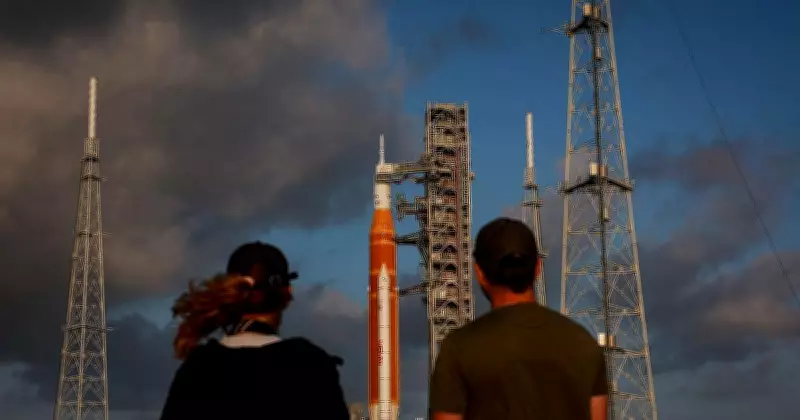
NASA's Artemis II Mission: A Step-by-Step Guide to the Lunar Flyby
NASA is gearing up for the Artemis II mission, a critical step in returning humans to the Moon. Scheduled for launch in 2025, this mission will send a crew of four astronauts on a journey around the Moon, paving the way for future lunar landings under the Artemis program. Unlike Artemis I, which was uncrewed, Artemis II will mark the first time astronauts have ventured beyond low-Earth orbit since the Apollo era.
Mission Overview and Objectives
The primary goal of Artemis II is to test the Orion spacecraft's systems with a crew on board in deep space. This includes evaluating life support, communication, and navigation systems during a lunar flyby. The mission aims to validate technologies and procedures essential for the subsequent Artemis III mission, which plans to land astronauts on the lunar surface.
Crew Composition and Roles
The Artemis II crew consists of four astronauts: three from NASA and one from the Canadian Space Agency (CSA). Their roles include piloting the Orion spacecraft, conducting scientific experiments, and monitoring spacecraft performance. This diverse team represents a collaborative effort in international space exploration, highlighting NASA's partnerships for lunar missions.

Detailed Mission Timeline
Launch Phase: Artemis II will launch from Kennedy Space Center in Florida aboard the Space Launch System (SLS) rocket. The SLS will propel the Orion spacecraft into Earth orbit, where initial systems checks will be performed.
Trans-Lunar Injection: After orbiting Earth, the SLS's upper stage will fire to send Orion on a trajectory toward the Moon. This maneuver, known as trans-lunar injection, will set the spacecraft on a path for a lunar flyby.
Lunar Flyby: Orion will approach the Moon, swinging around its far side without landing. During this phase, astronauts will test communication systems with Earth and collect data on radiation exposure in deep space.
Return Journey: Following the lunar flyby, Orion will use its engines to adjust its course for the return to Earth. The spacecraft will re-enter Earth's atmosphere at high speeds, testing heat shield performance before splashing down in the Pacific Ocean.
Scientific and Technological Goals
Artemis II will carry out several key experiments:
- Radiation Monitoring: Measuring cosmic radiation levels to assess risks for future long-duration missions.
- Life Support Testing: Evaluating systems that recycle air and water, crucial for sustaining crew on longer journeys.
- Navigation Systems: Testing deep-space navigation technologies that will be used for lunar landings.
These experiments aim to gather data that will inform the design of future missions, including those to Mars.
Significance for Future Exploration
Artemis II is a pivotal mission in NASA's broader Artemis program, which seeks to establish a sustainable human presence on the Moon by the end of the decade. By demonstrating crewed operations in lunar orbit, it reduces risks for Artemis III and beyond. This mission also reinforces international cooperation in space exploration, with contributions from agencies like CSA.
In summary, NASA's Artemis II mission represents a bold step forward in human spaceflight, combining rigorous testing with ambitious goals for lunar and deep-space exploration. As preparations continue, the world watches eagerly for this historic journey around the Moon.






