

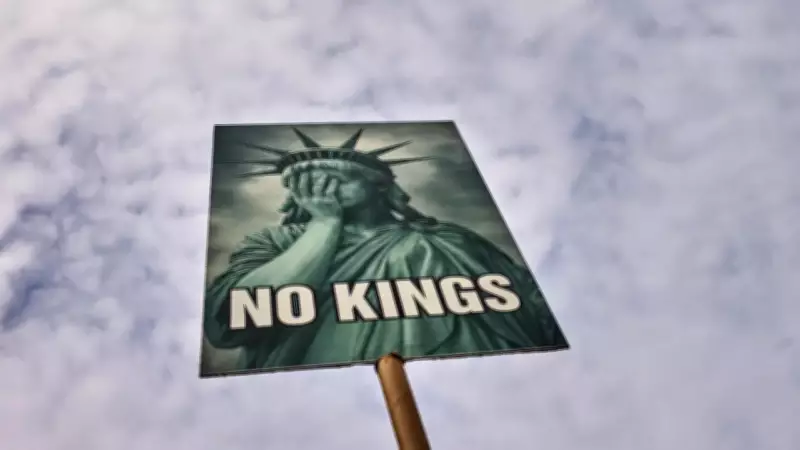
Nationwide 'No Kings' Protests Target Trump's Governance and Iran War
Massive nationwide protests against US President Donald Trump are anticipated on Saturday, with millions of Americans expected to voice their anger over what they perceive as his authoritarian tendencies and various forms of harsh, law-disregarding governance. This marks the third major demonstration in less than a year under the grassroots movement known as "No Kings," which has emerged as the most vocal and visible channel for opposition since Trump began his second term in January 2025.
Growing Movement Against Trump's Policies
Protesters now have a new focal point for their outrage: the war in Iran, launched by Trump alongside Israel, characterized by constantly shifting objectives and uncertain timelines for resolution. The "No Kings" movement has gained momentum, with the first nationwide protest day occurring in June on Trump's 79th birthday, coinciding with a military parade in Washington that he insisted on holding. That event drew several million participants from New York to San Francisco and numerous locations in between.
The second "No Kings" day in October attracted an estimated seven million protesters, according to organizers. The goal for Saturday is to mobilize even larger crowds, as Trump's approval rating hovers around a low 40 percent, and midterm elections approach in November, potentially threatening Republican control of both congressional chambers.

Deep Political Divides and Grievances
Just as Trump is revered by many in his "Make America Great Again" movement, he is equally disliked or even despised with intense passion on the other side of America's vast political divide. Critics lament his preference for ruling through executive decrees, his use of the Justice Department to prosecute opponents, his support for fossil fuels and climate change denial amid global warming, his opposition to racial and gender diversity initiatives, and his newfound inclination to project US military power despite campaigning as a peace advocate.
Naveed Shah of Common Defense, a veterans association aligned with the "No Kings" movement, stated, "Since the last time we marched, this administration has dragged us deeper into war. At home, we've watched citizens killed in the streets by militarized forces. We've seen families torn apart and immigrant communities targeted. All of it done in the name of one man trying to rule like a king."
Expanding Protests and Key Locations
Organizers report that more than 3,000 rallies are planned, an increase from the previous protest day, spanning major cities from coast to coast, as well as suburbs and rural areas—including the Alaskan town of Kotzebue, located above the Arctic Circle. Minnesota is set to be a significant focal point, returning to the spotlight months after becoming the epicenter of national debates over Trump's aggressive immigration crackdown.
Legendary rocker Bruce Springsteen, a vocal critic of the president, is scheduled to perform in St. Paul, Minnesota's capital, with his song "Streets of Minneapolis." This ballad was written and recorded within 24 hours in memory of Renee Good and Alex Pretti, Americans who were shot and killed by federal agents during protests in frigid January weather against Trump's immigration offensive.
Movement's Evolution and Broader Concerns
The "No Kings" movement emphasized, "Masked secret police terrorizing our communities. An illegal, catastrophic war putting us in danger and driving up our costs. Attacks on our freedom of speech, our civil rights, our freedom to vote. Costs pushing families to the brink. Trump wants to rule over us as a tyrant." What began in 2025 as a simple day of defiance has expanded into a powerful national resistance movement against the Trump administration.
Organizers note that two-thirds of those planning to rally on Saturday do not reside in major cities, which in the US are often Democratic strongholds—a statistic that has risen sharply since the last protest. Randi Weingarten, president of the American Federation of Teachers, commented, "America is at an inflection point. People are afraid, and they can't afford basic necessities. It's time the administration listened and helped them build a better life rather than stoking hate and fear."

This widespread discontent underscores the deepening political and social tensions as the nation grapples with Trump's governance and international conflicts.





