

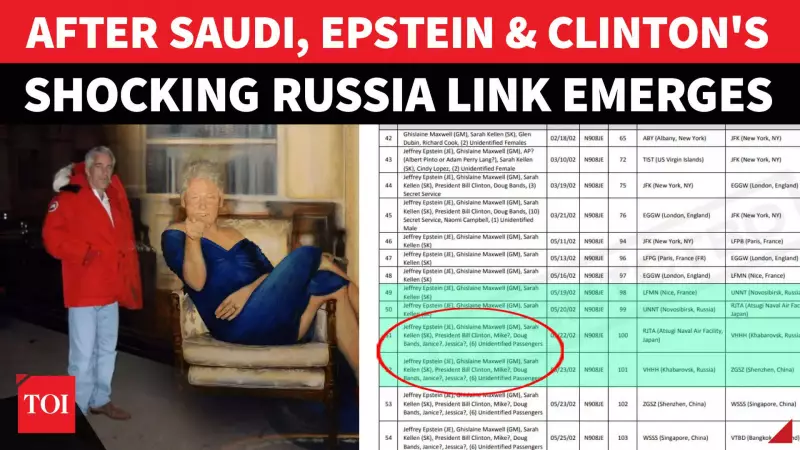
In a major development that is sending shockwaves across the globe, newly released U.S. Justice Department documents have laid bare the extensive international travels of convicted sex offender Jeffrey Epstein. The files, made public under a new law, provide explosive details about trips to Russia and China involving powerful associates, raising urgent questions about the nature of these journeys.
Flight Logs Reveal Startling Itineraries
The core revelation from the thousands of pages unsealed is that Jeffrey Epstein flew to Russia at least three times during the early 2000s. One of these trips included a stop in the Far Eastern city of Khabarovsk. Notably, this particular journey was not taken alone. The flight logs indicate that Epstein was accompanied on his private Boeing 727 by two high-profile figures: former U.S. President Bill Clinton and Epstein's longtime associate, Ghislaine Maxwell.
These documents were forced into the public domain by the Epstein Files Transparency Act, a piece of legislation signed into law by then-President Donald Trump in 2025. The act has successfully unlocked a trove of previously sealed records, offering the public and investigators a clearer, though disturbing, window into Epstein's network.

Financial Transfers and Legal Silence
Beyond the travel records, the files shed light on financial activities that deepen the mystery. They reveal that Epstein authorized financial transfers to Russia. In a particularly telling detail, the documents note a payment of $10,000 to Russian women, though the precise context and purpose of this transaction remain a subject of intense scrutiny and speculation.
When directly questioned by authorities about the nature and purpose of his travels to Russia, Jeffrey Epstein invoked his Fifth Amendment right against self-incrimination. This move prevented him from having to provide answers, further fueling suspicions and leaving a critical gap in the official narrative.
A Crisis of Trust and a Demand for Accountability
The cumulative weight of these disclosures is profoundly impacting public trust. The image of a disgraced financier, a former U.S. president, and a convicted accomplice traveling together to remote parts of Russia on a private jet is a powerful and unsettling one. It inevitably fuels renewed and intense scrutiny of Epstein's vast web of international connections and his relationships with elite figures from politics, business, and academia.
This is not just a historical accounting; it is a live issue demanding transparency and answers. The revelations prompt urgent questions about what was discussed, who was met, and what the true objective of these international excursions was. The story, far from being closed, continues to unfold, applying pressure on all those named and associated to provide a full and honest accounting of their dealings with Jeffrey Epstein.






