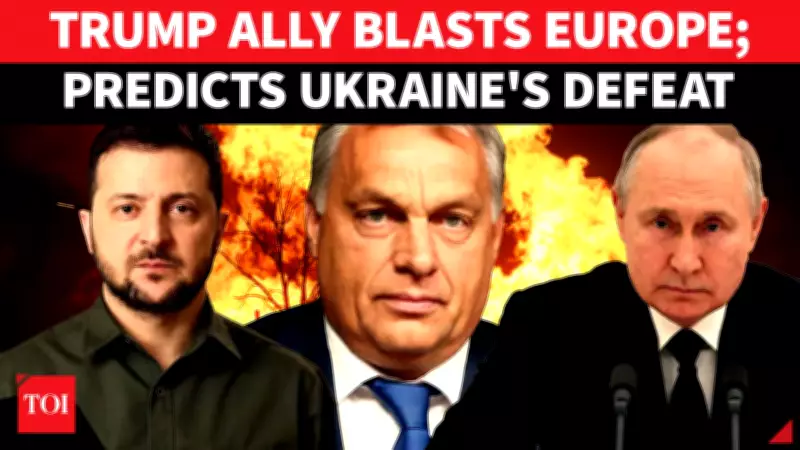
Hungarian Prime Minister Viktor Orbán Declares Putin's Victory Inevitable in Ukraine Conflict
In a stark warning to European leaders, Hungarian Prime Minister Viktor Orbán has declared it "naive" to believe Russia will be defeated in its ongoing war with Ukraine. The EU leader's comments come amid escalating tensions within the bloc over support for Kyiv.
Orbán Accuses Germany and Domestic Rivals of Escalating Conflict
Prime Minister Orbán specifically targeted Germany and Hungarian political opponents, including the Tisza Party and Democratic Coalition, accusing them of pursuing policies that could drag Europe deeper into the Russia-Ukraine conflict. The Hungarian leader warned that these approaches risked expanding the war's scope beyond current boundaries.
"We must recognize the reality on the ground," Orbán stated, emphasizing his position that Western expectations of a Russian defeat were fundamentally misguided.
Hungary's EU Veto Power and Opposition to Ukraine Support
The Hungarian leader issued a firm warning against any attempts to weaken Hungary's veto power within the European Union. Orbán made clear his opposition to both increased financial and military aid to Ukraine and any potential EU membership for the embattled nation.
Orbán's stance represents a significant challenge to the European Union's unified front against Russian aggression. His position highlights the growing divisions within the bloc regarding how to respond to the prolonged conflict.
The Broader European Context
The Hungarian prime minister's declaration comes at a critical juncture in European politics, where support for Ukraine has become a defining issue for many EU member states. Orbán's comments reflect a growing sentiment among some European leaders that a negotiated settlement may be necessary, rather than continued military confrontation.
Orbán emphasized that his position was based on a realistic assessment of military capabilities and geopolitical realities, rather than ideological alignment with Moscow. "We must pursue policies that protect European interests without escalating conflicts unnecessarily," he added.
Implications for European Unity
The Hungarian leader's statements raise important questions about the future of European unity in responding to international crises. As one of the EU's member states with veto power on certain decisions, Hungary's position could significantly impact collective European actions regarding Ukraine.
Orbán's warning about the naivety of expecting Russian defeat represents a fundamental challenge to the prevailing narrative in many Western capitals. His comments suggest a growing divergence in strategic thinking between different factions within the European Union.
The Hungarian prime minister's declaration underscores the complex political landscape facing Europe as it navigates its response to the ongoing conflict, with implications that extend far beyond the immediate battlefield in Ukraine.