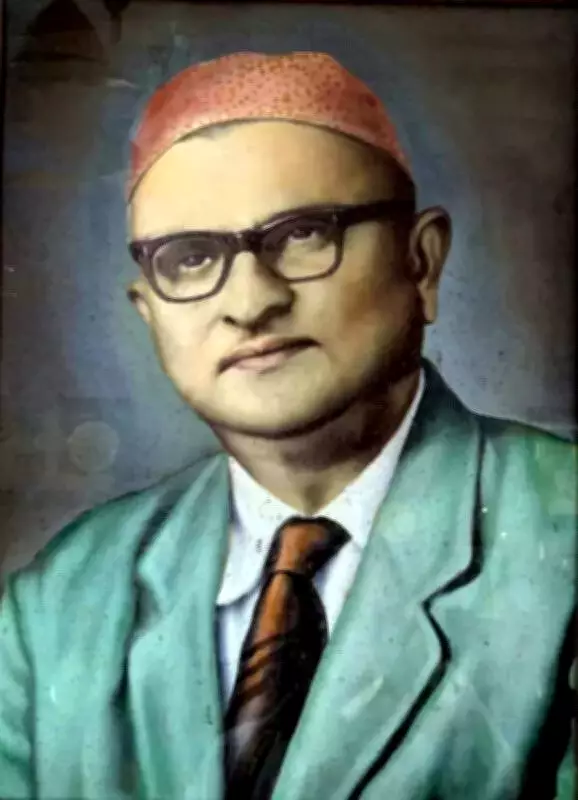
The Unsung Architect of Gujarat's Administrative Language
In the formative years following Gujarat's statehood in 1960, while the region was establishing its political and administrative identity, a dedicated Parsi educator from Surat was quietly revolutionizing how that identity would be documented. Naushirwan Karanjia, a tutor by profession, gifted the Gujarati language its first functional shorthand system—Maher Laghulipi—at a time when handwritten records were the backbone of governance.
Bridging a Critical Linguistic Gap
Long before the digital era transformed office workflows, Karanjia recognized a significant void in administrative efficiency. Despite having only a matriculation education, he was widely respected as an accounting teacher who mentored several chartered accountants in Surat. His intellectual curiosity, however, was particularly captivated by shorthand systems.
Inspired by the prestige associated with English shorthand proficiency and the gold medals awarded to top performers, Karanjia mastered the English system and began teaching it. This deep engagement led him to a crucial realization: Gujarati lacked its own shorthand, creating barriers in official documentation and communication.

The Development of Maher Laghulipi
Around 1954, Karanjia embarked on the ambitious project of creating a Gujarati shorthand system, despite not having formal training in the language. According to his younger son, Rohin Karanjia, "He realized that Gujarati needed its own system for official use." This endeavor was painstaking, requiring nearly a decade of experimentation to ensure the system achieved optimal speed, clarity, and consistency.
The 1950s were an era when offices depended heavily on stenographers and note-takers. Shorthand training was essential for staff assisting senior officials across both government and private organizations. Yazdi Karanjia, his elder son, recalled, "There were no computers or mobile phones then. Shorthand was the fastest and most reliable way to record information."
Official Adoption and Implementation
After Gujarat was carved out as a separate state in May 1960, the demand for documentation in Gujarati surged significantly. Recognizing this need, then state minister Hitendra Desai approached Karanjia to explore the feasibility of implementing Gujarati shorthand in government offices. Karanjia enthusiastically accepted the responsibility, committing to train government staff and prepare a comprehensive reference book on the system.
In 1966, he trained the inaugural batch of 18 government officers drawn from Ahmedabad, Vadodara, Dahod, Godhra, and other regions. This training coincided with the publication of the first part of his Gujarati shorthand book. The publishing process itself presented substantial challenges, as specialized printing blocks for shorthand symbols were unavailable at the time. With support from colleagues and well-wishers, the first volume was successfully released.
A Legacy Cut Short and Continued
Tragically, Karanjia passed away suddenly in August 1966, just as the second part of his book was nearing completion. His untimely death left the shorthand training program incomplete. However, his son Rohin stepped forward to carry on his father's pioneering work. Trained in Mumbai, Rohin painted the basic designs of each shorthand symbol and continued training government staff, many of whom achieved impressive writing speeds of 60 to 80 words per minute.
Rohin honored his father's commitment to accessibility, stating, "My father had promised that he would not charge government officials for training. We honored that promise even after his death, though we were later asked to take fees."
Enduring Impact on Institutional Communication
Naushirwan Karanjia's contribution extended far beyond creating a writing system. At a time when administrative efficiency relied entirely on handwritten records, his work played a vital role in strengthening institutional communication within the young state. Maher Laghulipi enabled faster recording of ideas, decisions, and debates, facilitating smoother governance during Gujarat's critical early years.

His story represents a remarkable intersection of linguistic innovation and public service—a testament to how individual dedication can address systemic needs and leave a lasting imprint on a region's administrative heritage.