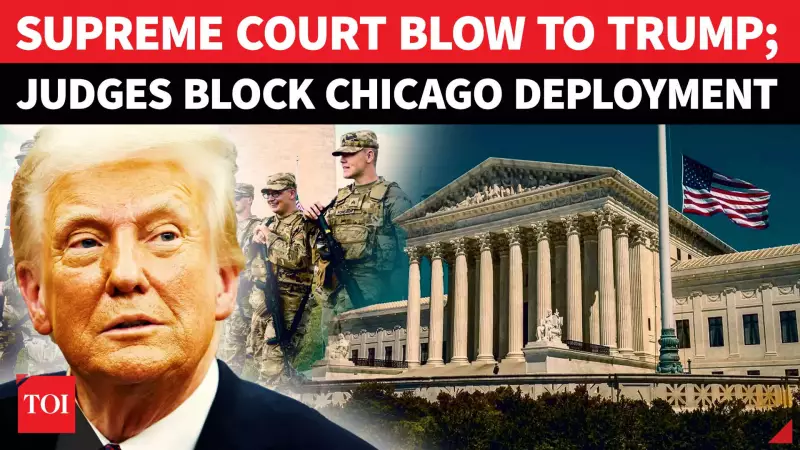
In a significant legal and political development, the United States Supreme Court has dealt a major blow to former President Donald Trump. The court blocked his attempt to deploy National Guard troops on the streets of Chicago. The stated purpose was to protect Immigration and Customs Enforcement (ICE) operations.
A Rare Emergency-Docket Loss for Trump
The ruling came on the court's emergency docket, marking a rare loss for Trump before the conservative-majority bench. The decision was announced on December 24, 2025. The justices found that the Trump administration failed to demonstrate clear legal authority to use military personnel for domestic law enforcement within the state of Illinois.
This move was part of a broader immigration crackdown strategy. The idea of sending troops into a major Democratic-led city like Chicago had sparked intense controversy. Critics argued it represented a dangerous federal overreach and an inappropriate militarization of civil law enforcement.

Sharp Dissents and Reignited Debates
The Supreme Court's decision was not unanimous. It provoked sharp dissents from some justices, highlighting the deep legal and ideological divides on the issue. The ruling has immediately reignited a national debate on several core issues:
- Presidential Power: The limits of a president's authority to command the military for domestic purposes.
- Federal vs. State Authority: The balance of power between the federal government and states, especially when governing major cities.
- Immigration Enforcement: The methods considered acceptable for carrying out immigration crackdowns.
The court's rejection signals a judicial check on the use of armed forces for internal policing without explicit congressional or statutory approval. It sets a precedent that could affect future administrations contemplating similar actions.
Broader Implications and Political Fallout
This setback for Trump's immigration policy arrives amid a highly charged political atmosphere. The decision is seen as a victory for those advocating for stricter limits on executive power and against the militarization of immigration enforcement. For Trump and his supporters, it represents a frustrating barrier to a key policy aim.
The case underscores the ongoing tension between aggressive federal immigration strategies and the legal frameworks designed to constrain them. It also places a spotlight on the role of the Supreme Court in adjudicating disputes that sit at the intersection of national security, presidential authority, and civil liberties.
As the legal and political analysis continues, this ruling is likely to be cited in future arguments concerning the separation of powers and the appropriate role of the military in American civic life.