Texas Social Media Influencer Escalates Immigration Dispute, Threatens Federal Action Over Alleged Harassment
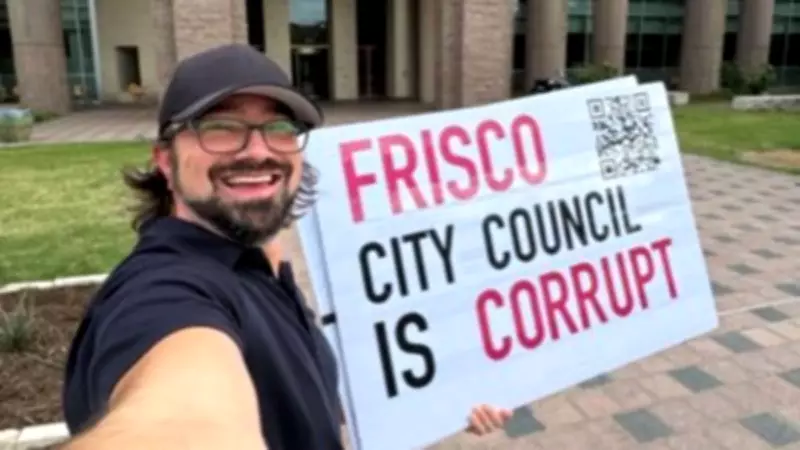
In a rapidly intensifying social media controversy tied to immigration issues in Texas, self-described whistleblower and influencer Marc Palasciano has publicly accused individuals of Indian origin of harassing him with a barrage of spam telephone calls. Palasciano has issued a stark warning that he may pursue federal legal action against those responsible, citing violations of both state and federal statutes.
Public Accusations and Legal Threats on Social Media
Palasciano took to the platform X to voice his grievances in a direct and confrontational manner. In a post that has since garnered significant attention, he wrote: “Dear Indians Targeting Me - You’re now in violation of federal and state law. Thank you for allowing me the opportunity to have the Federal Government come find you. FAFO.” This statement underscores his intent to escalate the matter to governmental authorities.
The influencer's warning followed his sharing of a video where he detailed an influx of unwanted calls over recent days. Palasciano explicitly linked the onset of these calls to his public commentary on what he terms an “Indian takeover” in the city of Frisco, Texas, and his criticisms of the H-1B visa program, which facilitates skilled foreign workers, including many from India, to work in the United States.

Evidence and Allegations of Illegal Activity
In the video, Palasciano displayed his phone call logs as purported evidence, stating: “Let me show you how some Indians are now breaking the law. Look at my spam calls. This is from Tuesday. This is from yesterday. I had 30 spam calls call me yesterday. And this is from today, just from 8:40 to 9:48 a.m.” He emphasized that this pattern was not coincidental but a direct response to his outspoken views.
He further argued that such actions constitute illegal harassment under the Telephone Consumer Protection Act (TCPA), a federal law designed to protect consumers from unsolicited communications. “It is illegal for people to sign other people up to spam calls. It is a violation of the Telephone Consumer Protection Act. And on top of that, it's targeted harassment,” Palasciano asserted in his video.
Planned Regulatory Complaint and Broader Implications
Palasciano announced his intention to file a formal complaint with the Federal Communications Commission (FCC), the regulatory body overseeing telecommunications. He explained: “There's a process where you can go file a complaint with the FCC and they'll look into this for you and possibly they'll find the people that are doing this to you. So, I'm going to file one of those, we'll see what happens.” While noting that a phone screening feature has mitigated personal disruption, he framed the issue as a matter of principle and legal integrity.
He contended that his criticisms are protected under the First Amendment, whereas the alleged spam calls represent unlawful retaliation. “Speaking up using the First Amendment isn't against the law. What they're doing is against the law,” Palasciano stated, reinforcing his position that the harassment is an attempt to silence his discourse on immigration and visa policies.
Context: Frisco City Council and Broader Social Media Backlash
This dispute emerges against a backdrop of recent controversies surrounding Frisco City Council meetings. Previously, Palasciano posted a photograph of Boy Scouts participating in a council session, interpreting their presence as evidence of an “Indian takeover.” However, this claim has been widely challenged by social media users and local observers.
Many have pointed out that the involvement of Boy Scouts or Cub Scouts in leading the Pledge of Allegiance at Frisco council meetings is a long-standing local tradition. These youth groups, affiliated with Scouting America, regularly participate in civic ceremonies across Texas, a practice unrelated to ethnic or immigration dynamics. This context highlights the polarized nature of the online debate, where perceptions of community integration and cultural influence are hotly contested.

The incident underscores the volatile intersection of social media, immigration politics, and legal recourse in contemporary American discourse. As Palasciano moves forward with his threat of federal action, the situation continues to evolve, reflecting broader tensions around diversity, free speech, and the experiences of immigrant communities in the United States.