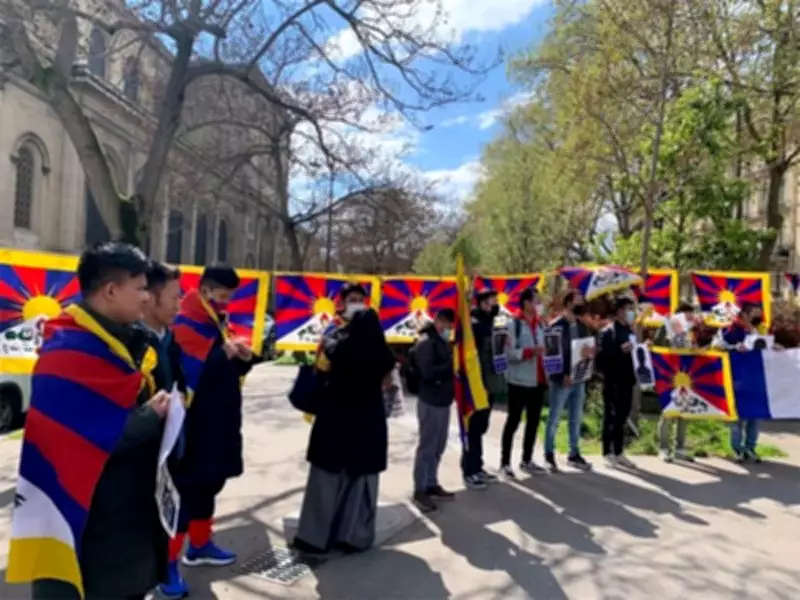
Protest at UN Headquarters
Three members of Students for a Free Tibet (SFT) chained themselves to the gates of the United Nations headquarters in New York on July 11, 2026, demanding stronger international action over China's policies in Tibet and the death of Tibetan activist Lobga Rangzen. The demonstration occurred during the week marking the first anniversary of Rangzen's self-immolation outside the UN building, as reported by Phayul.
Activists Criticize UN Response
The protesters argued that the United Nations had failed to adequately respond to Rangzen's sacrifice. According to Phayul, no significant action or statement addressing the human rights situation in Tibet had followed his death. Although UN spokesperson Stephane Dujarric described the incident as 'absolutely tragic' and conveyed condolences on behalf of Secretary-General Antonio Guterres, Tibetan activists contended that sympathy alone was insufficient.
Demands for Investigation
The demonstrators urged UN High Commissioner for Human Rights Volker Turk to publicly address the worsening situation in Tibet, seek unrestricted access for independent investigators, and press China over allegations of systematic repression. Supporters from the Tibetan community also gathered near the UN headquarters to express solidarity, as seen in visuals from the protest.

Detentions and Charges
The three activists—Tenzin Tseten, Tsela Zoksang, and Tenzin Kunchok—were detained by the New York City Police Department after blocking an entrance to the UN headquarters. They were later released and are reportedly facing multiple charges.
Voices from the Protest
Speaking during the demonstration, SFT Campaign Director Tsela Zoksang said the protest aimed to draw global attention to what campaigners describe as China's continued assault on Tibetan identity. She stated that Lobga Rangzen's self-immolation reflected the exploitation felt by many Tibetans and claimed that more than 170 Tibetans have self-immolated over the years in opposition to Chinese rule, as highlighted by Phayul.
Opposition to Ethnic Unity Law
The activists also criticized China's Ethnic Unity and Progress Law, which came into force on July 1, arguing that it institutionalizes assimilation policies in Tibet. They alleged that the law strengthens measures such as placing Tibetan children in Mandarin-medium boarding schools and implementing policies that undermine traditional Tibetan nomadic communities, threatening the preservation of Tibetan language, culture, and religion, as reported by Phayul.