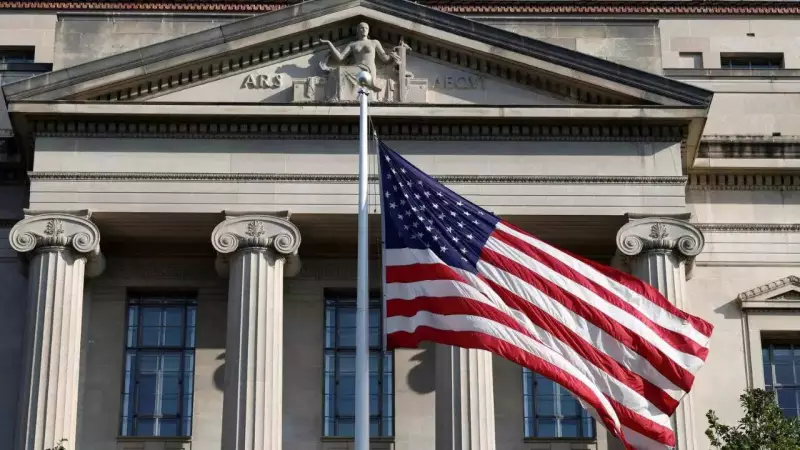
The administration led by President Donald Trump has initiated a significant legal confrontation with the capital's government. The US Department of Justice filed a lawsuit on Monday against Washington, DC, arguing that the district's stringent regulations on certain firearms violate the constitutional rights of its citizens.
Core of the Legal Challenge
The lawsuit was lodged in the District Court for the District of Columbia. It names the Metropolitan Police Department and its outgoing chief, Pamela Smith, as the defendants. The central argument from the federal government is that DC's laws unconstitutionally ban a wide range of semiautomatic firearms, including popular models like the Colt AR-15 series rifles.
In its filing, the Justice Department stated it is acting to protect rights guaranteed for 234 years and repeatedly reaffirmed by the Supreme Court. This case represents the second such action by the administration this month, following a similar lawsuit against the US Virgin Islands.

Historical Context and Legal Arguments
The federal case leans heavily on the precedent set by the Supreme Court's landmark 2008 District of Columbia v. Heller decision. That ruling, which also stemmed from a challenge to DC's gun laws, established an individual's right to possess firearms for self-defense within the home. Crucially, it protected weapons "in common use" for lawful purposes.
The Justice Department now contends that Washington, DC, has overstepped the boundaries set by that ruling. The lawsuit alleges the district effectively criminalizes law-abiding residents by prohibiting them from registering widely owned firearms and then penalizing them for possessing those unregistered weapons.
Arbitrary Restrictions and Federal Authority
An interesting facet of the government's argument is that DC's prohibitions are based on superficial features. The filing claims the bans target firearms based on "cosmetics, appearance, or the ability to attach accessories," rather than a weapon's functionality or its common use for legal activities.
Unlike the Heller case, this lawsuit does not involve individual DC residents as plaintiffs. Instead, the Trump administration asserts its authority to challenge the local laws under a federal crime statute enacted in 1994.
Broader Political Tensions
This legal action marks another flashpoint in the ongoing friction between the federal government and the District of Columbia. Earlier in the summer, the Trump administration launched a law enforcement intervention in the capital to address crime, a move that involved deploying the National Guard. That intervention is itself being challenged in court by DC's attorney general.
The Metropolitan Police Department has declined to comment on the new lawsuit, citing a policy of not discussing pending litigation. The outcome of this case could set a major precedent regarding the extent to which local governments can regulate firearm ownership, reigniting a national debate just months before a presidential election.