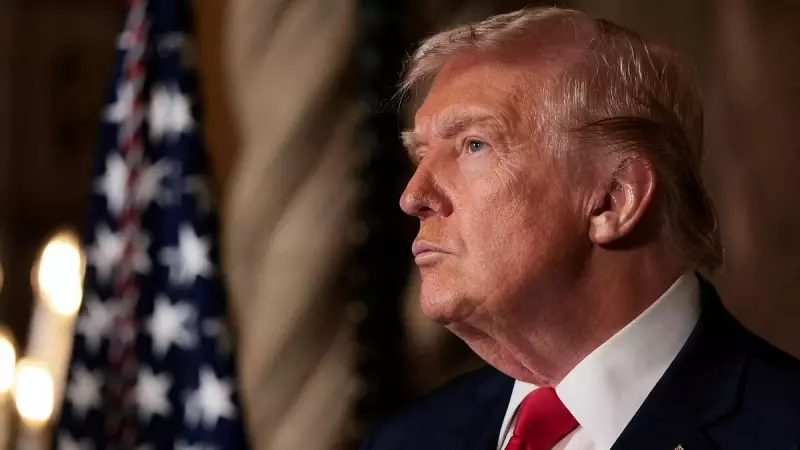
In a move highlighting the enduring strategic importance of the Arctic, former US President Donald Trump has appointed a special envoy for Greenland. He has emphatically stated that the United States needs the vast, ice-covered territory for its national security, framing it as a geopolitical imperative.
The Strategic Appointment and a Stark Declaration
Donald Trump, during a recent campaign speech, revealed the appointment of a special envoy whose primary focus will be Greenland. He did not disclose the envoy's name publicly. The announcement was coupled with a characteristically blunt assessment of American interests. "We have to have it," Trump declared, referring to Greenland. He elaborated that the US required the territory "for national security" reasons, placing it firmly within the context of great-power competition, particularly with China and Russia.
This is not the first time Trump has expressed a keen interest in Greenland. During his presidency in 2019, he publicly floated the idea of the US purchasing the autonomous Danish territory, an offer that was swiftly and firmly rejected by Denmark, leading to a diplomatic spat. The new appointment signals that the strategic value of Greenland remains a top priority in certain American political circles, irrespective of the occupant of the White House.

Why Greenland Matters: The Arctic Chessboard
The renewed focus on Greenland is driven by profound shifts in the geopolitical and physical landscape of the Arctic. Climate change is rapidly melting sea ice, opening up new shipping routes like the Northern Sea Route and access to vast untapped natural resources, including oil, gas, and rare earth minerals. This has turned the region into a zone of intense strategic competition.
Greenland's location is supremely strategic. It sits between North America and Europe, overlooking key maritime approaches. For the US, maintaining influence there is seen as critical to countering Russian military buildup in the Arctic and China's efforts to declare itself a "near-Arctic state" and gain economic footholds. The US already operates a critical early-warning radar and air base at Thule in northern Greenland, a key node in North American aerospace defense.
The appointment of a special envoy is a clear tactic to deepen bilateral engagement with Greenland, bypassing or supplementing discussions through Copenhagen. It aims to strengthen economic, scientific, and diplomatic ties, ultimately weaving Greenland more tightly into the US security umbrella.
Reactions and Future Implications
While the announcement came from a former president, it underscores a bipartisan consensus in Washington on the Arctic's importance. The current Biden administration has also emphasized Arctic security, releasing a national strategy for the region and bolstering diplomatic and military presence.
The move is likely to be watched closely and with some unease in both Nuuk and Copenhagen. Greenland, while self-governing, handles foreign and security policy in consultation with Denmark. Direct outreach from a major power like the US can create complex tensions. Greenlandic leaders have consistently stated a desire for diverse international partnerships and economic development, but not at the cost of their autonomy or by becoming a pawn in a larger conflict.
Furthermore, Russia and China will view this development as a confirmation of their fears about US intentions to dominate the Arctic. It could potentially accelerate their own efforts to secure partnerships and military advantages in the region, leading to a more militarized and tense High North.
In conclusion, Donald Trump's appointment of a special envoy for Greenland is more than a political headline. It is a stark reminder that the remote island is at the heart of a 21st-century strategic scramble. As the ice recedes, the geopolitical heat in the Arctic is rising, with Greenland positioned as a central piece in a complex global puzzle involving national security, climate change, and resource competition. The world will be watching how this focused American diplomacy unfolds in the years to come.