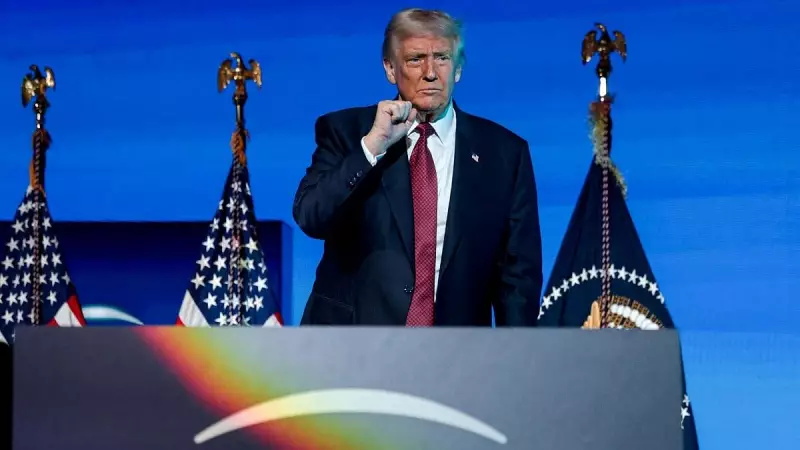
Former President Donald Trump has dramatically consolidated his power over the Republican Party, installing loyalists in key positions that will shape the party's strategy for the 2026 midterm elections even as he campaigns for the 2024 presidential race. This strategic move demonstrates Trump's enduring influence over the GOP apparatus and his determination to maintain control over the party's direction regardless of the 2024 outcome.
Leadership Shakeup at Republican National Committee
In a sweeping reorganization, Trump has successfully pushed for the election of his daughter-in-law, Lara Trump, as co-chair of the Republican National Committee. Simultaneously, his senior campaign advisor, Chris LaCivita, will assume the role of RNC chief operating officer. This leadership overhaul effectively places Trump's closest allies in command of the party's financial resources, campaign strategies, and operational decisions.
The changes come at a critical juncture for the Republican Party, which faces the dual challenge of supporting Trump's 2024 presidential bid while preparing for the 2026 midterm elections. The timing is particularly significant because the RNC typically remains neutral during competitive presidential primaries, but Trump's dominance has effectively eliminated any pretense of neutrality.

Financial Pressures and Legal Battles
The Republican National Committee faces substantial financial challenges, reporting just $8.7 million in cash reserves at the end of January compared to the Democratic National Committee's $24 million. This financial disparity comes as Trump's political operation has been spending heavily on his legal defenses, with millions diverted to law firms representing him in multiple criminal and civil cases.
Under the new leadership structure, there are growing concerns among some Republicans that RNC funds could be increasingly used to cover Trump's mounting legal expenses. Lara Trump has publicly stated that she believes Republican voters would support using party funds for her father-in-law's legal battles, a position that has raised eyebrows among party traditionalists.
Strategic Implications for 2026 Midterms
The consolidation of power extends beyond immediate financial concerns to long-term electoral strategy. By placing his loyalists in control of the RNC, Trump ensures that the party's apparatus will be aligned with his political priorities through the 2026 midterm elections. This means candidate recruitment, resource allocation, and campaign messaging will reflect Trump's vision for the Republican Party.
This move represents a significant departure from traditional party operations, where the national committee maintains some degree of independence from presidential campaigns. The restructuring effectively merges the Trump campaign and RNC operations, creating a unified political machine entirely under Trump's control.
The strategic implications are profound: Republican candidates in 2026 will likely need Trump's endorsement and alignment with his agenda to receive substantial party support. This could shape the ideological direction of the party for years to come, regardless of whether Trump wins the presidency in 2024.
Political analysts note that this level of control over a political party by a single individual, particularly one not currently holding elected office, is unprecedented in modern American politics. The developments underscore Trump's transformation of the Republican Party into an organization that operates as an extension of his personal political ambitions.
As the 2024 election approaches, the Republican Party finds itself in uncharted territory, with its institutional framework now firmly under the control of a presidential candidate who continues to face multiple legal challenges while reshaping the party's future direction.