

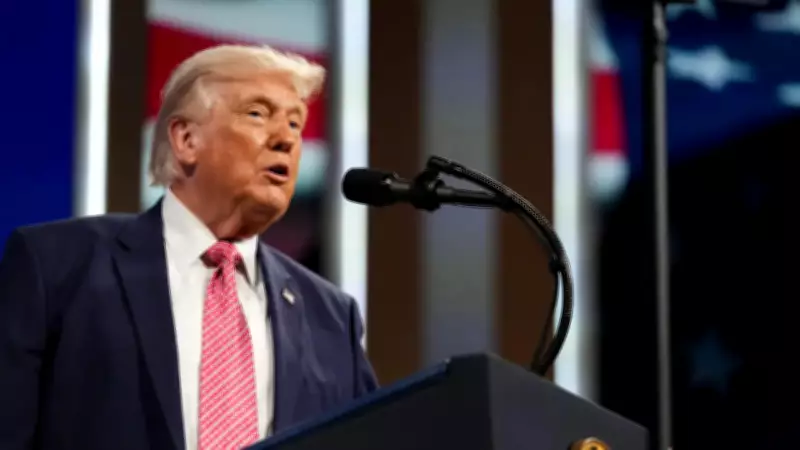
Trump Affirms Gulf Nations' Full Alignment with US in Escalating Iran Conflict
In a significant statement made aboard Air Force One on Sunday, US President Donald Trump declared that key Gulf nations are completely aligned with the United States in the ongoing war against Iran. The President specifically named Saudi Arabia, Qatar, the United Arab Emirates, Kuwait, and Bahrain as being "100% on our side" as regional tensions continue to intensify during the fourth week of hostilities.
Surprise at Iranian Retaliation and Gulf Response
President Trump revealed that both Washington and its Gulf allies were initially caught off guard by the scale and intensity of Iran's missile and drone attacks across the region. These strikes represent Tehran's retaliation against the US-Israeli military campaign targeting Iranian sites.
"Saudi Arabia is fighting back. Qatar is fighting back. UAE is fighting back. Kuwait is fighting back. Bahrain is fighting back," Trump stated emphatically. "They were surprised to be hit. I was very surprised when they got hit. And once they got hit they started fighting very well."

The President added, "Very strong communication with all of these countries and they go up on fighting 100% on our side."
Escalating Regional Conflict and Infrastructure Attacks
The US-Israeli war on Iran has now entered its fourth week, with hostilities spreading beyond initial targets to engulf significant portions of the Middle East. Iranian drone and missile strikes have increasingly targeted:
- US military positions throughout the region
- Energy installations critical to global oil supplies
- Aluminium production facilities in the UAE and Bahrain
- Allied infrastructure across Gulf nations
According to reports from the BBC, Iran's Islamic Revolutionary Guard Corps struck major aluminium production facilities in the UAE and Bahrain on Sunday, reportedly in retaliation for US and Israeli attacks on Iranian industrial sites.
Gulf Nations Seek Security Guarantees
Gulf officials, whose countries have repeatedly come under attack from Tehran during the conflict, have communicated to Washington in private meetings that Iran has left them no diplomatic "off-ramp," according to sources who spoke with Reuters. These officials are seeking any future agreement to include:
- Enforceable restrictions on missile and drone attacks against energy and civilian infrastructure
- Protections against threats to oil and shipping routes
- Limits on proxy warfare throughout the region
They also insist that any deal must rewrite the rules of engagement, providing guarantees that the strategically vital Strait of Hormuz will never again be used as a tool of war. Additionally, Gulf states are demanding to be formally included in the architecture of future security arrangements.
Economic Impact and Regional Stability Concerns
The ongoing attacks have disrupted energy and shipping routes, particularly around the strategic Strait of Hormuz, sending crude oil prices higher and prompting precautionary measures by Gulf ports. This economic disruption adds another layer of complexity to an already volatile regional situation.
Gulf Arab capitals—traditionally close US partners—have publicly condemned Iranian attacks on their territory and infrastructure following Tehran's retaliatory strikes. These nations find themselves caught between their historical alliance with the United States and the immediate security threats posed by Iran's military capabilities.
President Trump had previously expressed shock at Iran's retaliatory response targeting multiple Middle Eastern countries, stating, "They (Iran) weren't supposed to go after all these other countries in the Middle East. Nobody expected that. We were shocked." He later repeated his astonishment, adding, "Nobody, nobody, no, no, no. The greatest experts, nobody thought they were going to hit."
As the conflict enters its second month, the alignment of Gulf nations with US strategy represents a significant development in the regional power dynamics, though concerns about broader escalation and long-term stability continue to mount among international observers and regional governments alike.






