

Trump Makes Bold Claims on Iran Conflict, Issues Stark Warning
In a dramatic statement that has sent shockwaves through international diplomatic circles, former United States President Donald Trump has asserted that Iran is now ready to engage in a ceasefire agreement. This announcement comes amidst a backdrop of heightened military tensions and geopolitical maneuvering in the Middle East.
Ceasefire Readiness and Denial of Mojtaba Khamenei's Existence
Trump, known for his unorthodox foreign policy approaches during his tenure, made these remarks during a recent public address. He specifically claimed that Iranian leadership has signaled a willingness to halt hostilities, though he did not provide concrete evidence or details regarding the terms or timing of such a potential ceasefire. This assertion is particularly significant given the ongoing proxy conflicts and nuclear negotiations involving Iran and Western powers.
In a more controversial segment of his statement, Trump categorically denied the existence of Mojtaba Khamenei, a figure often rumored to be a potential successor to Iran's Supreme Leader Ayatollah Ali Khamenei. "Mojtaba Khamenei is not alive," Trump declared, challenging widespread reports and analyses from intelligence agencies and regional experts who have long monitored Mojtaba's influence within Iran's political and religious hierarchies. This denial adds a layer of intrigue to an already complex narrative surrounding Iran's future leadership dynamics.

Threat of Additional US Strikes on Kharg Island
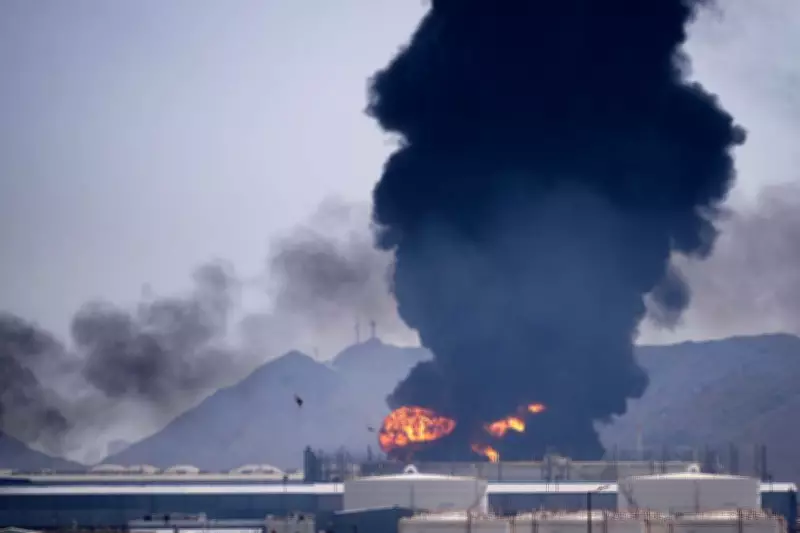
Despite the ceasefire claim, Trump issued a stern warning about the possibility of further United States military action. He explicitly mentioned Kharg Island, a critical hub for Iran's oil exports located in the Persian Gulf. "We are prepared to launch more strikes on Kharg Island if necessary," Trump stated, emphasizing a continued hardline stance towards Iran's economic and strategic assets.
This threat underscores the volatile nature of US-Iran relations, which have been marked by incidents such as the 2020 assassination of Iranian General Qasem Soleimani and subsequent retaliatory measures. Kharg Island, responsible for a significant portion of Iran's crude oil shipments, represents a high-value target that could severely impact Iran's economy if subjected to military strikes.
Analysis of Trump's Statements and Regional Implications
Experts are analyzing Trump's comments with a mix of skepticism and concern. Some view his ceasefire claim as a potential diplomatic opening, possibly aimed at de-escalating tensions or influencing upcoming political negotiations. Others caution that without verification from Iranian officials or international mediators, such statements may be more rhetorical than substantive.
The denial of Mojtaba Khamenei's existence is particularly puzzling, as it contradicts numerous reports from credible sources. Mojtaba, the second son of Ayatollah Khamenei, has been a subject of speculation regarding his role in Iran's succession plans. Trump's assertion could be an attempt to undermine Iran's internal stability or challenge narratives about its leadership continuity.
Regarding the threat to Kharg Island, military analysts note that any US strikes would likely provoke a strong Iranian response, potentially escalating into a broader conflict. The Persian Gulf is a strategically vital waterway, and disruptions there could have global economic repercussions, affecting oil prices and international trade routes.
Context and Background of US-Iran Tensions
The relationship between the United States and Iran has been fraught with hostility for decades, stemming from issues such as Iran's nuclear program, its support for militant groups in the region, and sanctions imposed by the US. Trump's presidency saw a significant escalation, including the withdrawal from the Iran nuclear deal (JCPOA) and the imposition of stringent economic sanctions.

Recent months have witnessed a series of incidents, including drone attacks and naval confrontations, that have kept tensions high. Trump's latest statements, therefore, are seen as part of an ongoing pattern of assertive posturing, even as he is no longer in office. His influence within the Republican Party and among certain voter bases means his words continue to carry weight in US foreign policy discussions.
As the situation develops, international observers are closely monitoring reactions from the Iranian government, as well as responses from the current US administration and allied nations. The potential for miscalculation or misinterpretation remains a significant risk in this already volatile region.





