

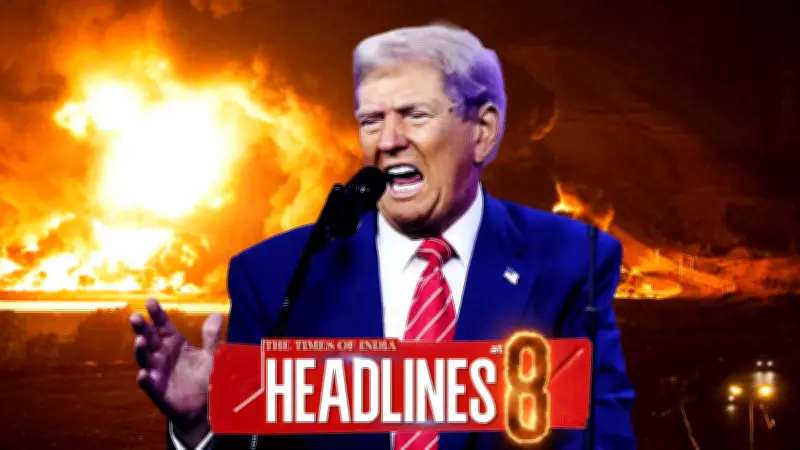
Trump Foresees Swift End To Iran Conflict, Raises NATO Exit Possibility
In a significant foreign policy statement, former US President Donald Trump has indicated that the ongoing war with Iran could reach a conclusion within a remarkably short timeframe of two to three weeks. This declaration comes amid escalating tensions and widening rifts between the United States and its traditional allies over the handling of the conflict.
NATO Branded A 'Paper Tiger' As US Frustration Mounts
Trump did not mince words when discussing the North Atlantic Treaty Organization, labeling the military alliance a "paper tiger" in his latest remarks. He strongly hinted at the possibility of the United States withdrawing from NATO, a move that would fundamentally reshape global security architecture. The former president's comments underscore a growing frustration within Washington as key international partners have largely refused to be drawn into direct involvement in the Iran conflict.
The standoff has been framed by Trump as a crucial test of burden-sharing and loyalty among allies. This perspective highlights deeper concerns about the distribution of defense responsibilities within international coalitions and questions about the future of American commitment to multilateral security agreements.

Modi Commits To Uniform Civil Code In Assam With Tribal Safeguards
Meanwhile, in a parallel domestic development, Prime Minister Narendra Modi has made a firm commitment to implement a Uniform Civil Code in the northeastern state of Assam. During his address, Modi provided crucial assurances that tribal safeguards and the state's unique cultural identity would remain fully protected under the proposed legal framework.
Political Contrasts Sharpen Both Globally And Domestically
The Prime Minister launched a pointed attack against the opposition Congress party, accusing them of engaging in "divisive politics" and employing alleged vote-bank tactics that undermine national unity. These twin developments occurring simultaneously have effectively sharpened both global geopolitical fault lines and domestic political pitches across two major democracies.
The contrasting narratives emerging from Washington and Assam highlight the complex interplay between international diplomacy and domestic policy-making. While Trump focuses on redefining America's global military commitments and conflict resolution timelines, Modi emphasizes legal uniformity with cultural preservation within India's federal structure.
These announcements come at a time of heightened global uncertainty, with implications for international security arrangements, alliance structures, and domestic governance models. The convergence of these statements underscores how leadership decisions in major powers can create ripple effects across both international relations and internal political landscapes.






