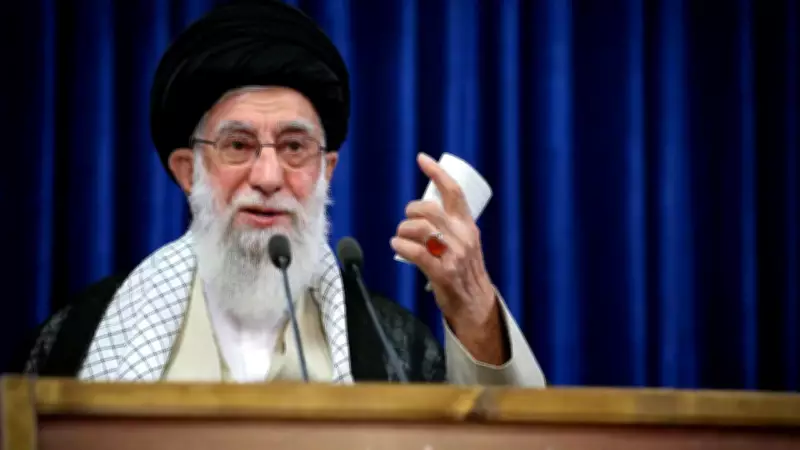
Trump Declares Iranian Supreme Leader Dead Following US-Israel Joint Air Strikes
In a dramatic social media announcement, former US President Donald Trump stated that Iran's Supreme Leader Ayatollah Ali Khamenei has died after coordinated American and Israeli air strikes. Trump characterized Khamenei's demise as "the single greatest chance for the Iranian people to take back their Country".
Details of the Attack and Immediate Aftermath
Trump described Khamenei as "one of the most evil people in history" and claimed the cleric "was unable to avoid our Intelligence and Highly Sophisticated Tracking Systems." He further warned that "heavy and pinpoint bombing" would continue "uninterrupted."
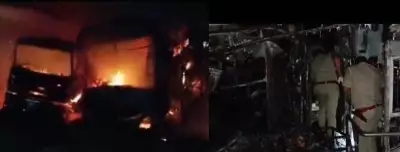
Two Israeli officials, speaking anonymously to the Associated Press, confirmed Israel had verified Khamenei's death after strikes targeted areas near his compound in Tehran. Iranian state media reported explosions across the capital, with smoke visible from downtown districts and roads leading to the supreme leader's offices blocked off.

Iran responded by closing its airspace and disrupting mobile networks. There has been no immediate official confirmation from Tehran regarding Khamenei's status.
Historical Context and Leadership Transition
Ayatollah Ali Khamenei, 86, had ruled Iran since 1989, making him the Middle East's longest-serving head of state. His death would signify only the second leadership transition since the 1979 Islamic Revolution, which established the Islamic Republic under Ruhollah Khomeini. Khamenei himself ascended to the supreme leadership in 1989 following Khomeini's death.
Under Iran's constitution, the supreme leader is selected and overseen by the 88-member Assembly of Experts. Candidates for this body are vetted by the Guardian Council, whose members are appointed directly or indirectly by the supreme leader. This tightly controlled process has historically confined succession planning to the regime's inner circle.
Potential Successors and Political Implications
The US-based Council on Foreign Relations has identified several clerics as possible successors to Khamenei:
- Ayatollah Alireza Arafi: A senior religious figure leading Iran's nationwide seminary system, who sits on both the Guardian Council and the Assembly of Experts. His promotion would indicate continuity within the existing clerical order.
- Hojjat-ol-Eslam Mohsen Qomi: A key adviser within Khamenei's office, viewed as a trusted insider with close proximity to the late leader.
- Ayatollah Mohsen Araki: A longstanding member of the Assembly of Experts, possessing the religious credentials and institutional experience often considered prerequisites for the role.
- Ayatollah Gholam Hossein Mohseni Ejei: Iran's judiciary chief, notable for his national security background and senior state positions. His administrative experience might appeal to those seeking stability during a volatile transition.
- Ayatollah Hashem Hosseini Bushehri: Friday prayer leader in Qom and Assembly member, another senior cleric frequently mentioned.
However, most potential contenders are in their mid-to-late sixties and lack Khamenei's decades-long consolidation of authority. Analysts caution that while elevating a favored insider may preserve the current power balance, it could also expose underlying rivalries within Iran's political and security establishment.
Regional and Global Consequences
With Iran already engaged in missile and drone exchanges with Israel and targeting US bases in the Gulf, any leadership change carries profound implications. The succession battle now unfolding behind closed doors could determine not only Iran's internal stability but also the future trajectory of its regional posture and nuclear policy.
The situation remains fluid, with international observers closely monitoring developments in Tehran and potential responses from global powers.