

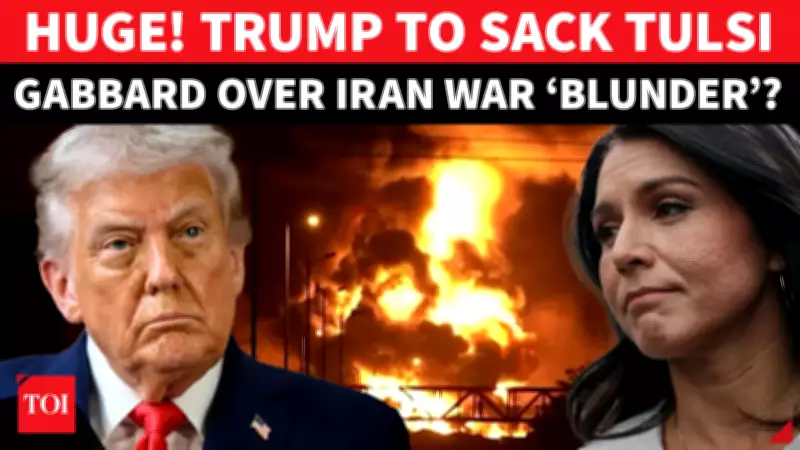
Trump Reportedly Weighs Dismissal of Tulsi Gabbard Following Senate Testimony on Iran
In a stunning development, US President Donald Trump has reportedly initiated discussions with his advisers about the potential removal of Tulsi Gabbard from her position as Director of National Intelligence. This move comes in direct response to Gabbard's recent testimony at a worldwide threats hearing, where she notably failed to condemn a former deputy who publicly challenged the administration's rationale for the ongoing Iran war.
Internal Tensions Rise Over Iran Policy Dissent
According to exclusive reporting by The Guardian, these deliberations signal escalating friction within Trump's inner circle as the administration confronts mounting dissent regarding its Iran strategy. The controversy centers on Gabbard's perceived lack of alignment with the administration's hardline stance, despite her continued role in the intelligence community.
The situation has created a complex political landscape, with Gabbard receiving mixed public endorsements while facing intense internal debate about her loyalty and policy alignment. Sources indicate that Trump's frustration stems specifically from Gabbard's refusal to publicly disavow the former deputy's critical assessment of the war justification during the Senate hearing.

Gabbard's Position Remains Uncertain Amid Administration Rift
While Gabbard currently maintains her position as Director of National Intelligence, the reported discussions suggest her tenure may be in serious jeopardy. The administration's Iran policy has become a flashpoint for internal disagreement, with Gabbard's testimony bringing these divisions into sharp public focus.
The timing of these developments is particularly significant as the United States navigates complex geopolitical challenges in the Middle East. Gabbard's potential dismissal would represent a major shakeup in Trump's national security team and could signal a broader realignment of the administration's approach to international conflicts.
Observers note that this situation highlights the ongoing tension between intelligence professionals and political leadership in matters of national security policy. As the debate continues behind closed doors, the future of US intelligence leadership remains uncertain amid these dramatic revelations about presidential dissatisfaction with a key national security official.






