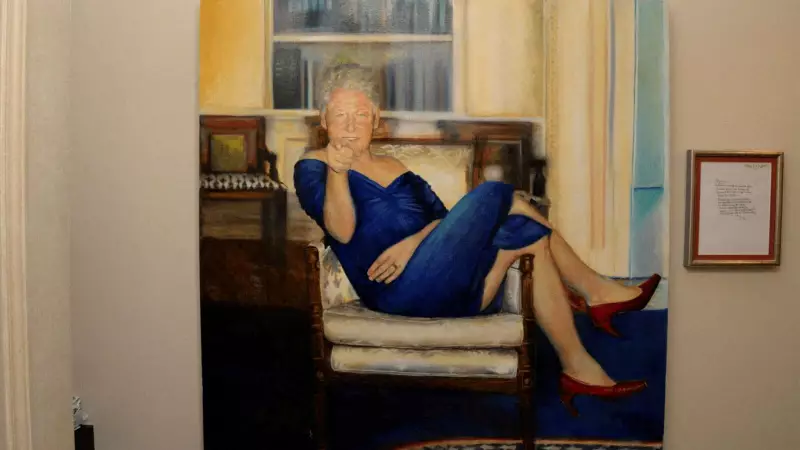
The political firestorm surrounding the late financier and convicted sex offender Jeffrey Epstein has engulfed former US President Bill Clinton once again, following new comments from President Donald Trump. The controversy erupted after the US Department of Justice began releasing thousands of pages of documents linked to federal investigations into Epstein.
Trump's Surprising Defence and Criticism of DOJ
Speaking from his Mar-a-Lago estate in Florida, President Donald Trump offered a defence of his predecessor, Bill Clinton, whose photographs appear frequently in the newly released cache. Trump argued that the circulation of photos with Epstein was unfairly damaging reputations. "No, I don't like the pictures of Bill Clinton being shown. I don't like the pictures of other people being shown. I think it's a terrible thing," Trump told reporters. He added, "I think Bill Clinton’s a big boy, he can handle it."
Trump emphasised that merely being photographed with Epstein did not imply wrongdoing. "People that really had nothing to do with Epstein, but they’re in a picture with him because he was in a party, and you ruin a reputation of somebody," he stated, noting that many people were angry about the ongoing release.

Staggered Release Fuels Bipartisan Anger
The Justice Department initiated the disclosure on Friday, December 19, 2025, but the process has been mired in controversy. The released material, which includes photographs, phone records, and investigative notes, was heavily redacted and incomplete. This partial disclosure missed a congressional deadline of December 19, with the DOJ citing the scale of the material and promising more in the coming weeks.
This has triggered rare bipartisan criticism. Lawmakers from both the Democratic and Republican parties accused the department of failing to comply with the bipartisan Epstein Files Transparency Act, which mandated the release. Critics argue the limited, staggered disclosure fuels speculation instead of ensuring transparency.
Some have accused the administration of attempting to shield President Trump, who had a known social relationship with Epstein before their fallout in the mid-2000s. Notably, Trump signed the Epstein files legislation into law only after sustained pressure from congressional Republicans.
Clinton's Camp Fires Back, Questions Motives
Bill Clinton's spokesperson, Angel Ureña, issued a sharp rebuke, questioning the Justice Department's motives and timing. "The White House hasn't been hiding these files for months only to dump them late on a Friday to protect Bill Clinton," Ureña said in a statement.
He accused the DOJ of using selective releases to imply wrongdoing. "This is about shielding themselves from what comes next... So they can release as many grainy 20-plus-year-old photos as they want, but this isn't about Bill Clinton. Never has, never will be," Ureña asserted. Bill Clinton has consistently denied any involvement in Epstein’s criminal activities and has never been charged.
Political Fallout and Legislative Threats
The dispute has exposed rifts within Trump's political base and increased pressure ahead of the midterm elections. Trump himself complained that the issue was a distraction from his administration's achievements and singled out Republican Congressman Thomas Massie, calling him "a real low life" and a "loser" for collaborating with Democrats on the legislation.
In response, the bipartisan sponsors of the act, Democratic Representative Ro Khanna and Republican Thomas Massie, have threatened to hold Attorney General Pam Bondi in contempt of Congress. "The quickest way... to get justice for these victims is to bring inherent contempt against Pam Bondi," Massie stated on CBS’s Face the Nation.
Survivors of Epstein’s abuse have also condemned the partial disclosure, stating that the failure to release all files violates the law and undermines justice. The episode continues to highlight the deep political divisions and the challenging pursuit of transparency in one of the most high-profile criminal cases of recent times.