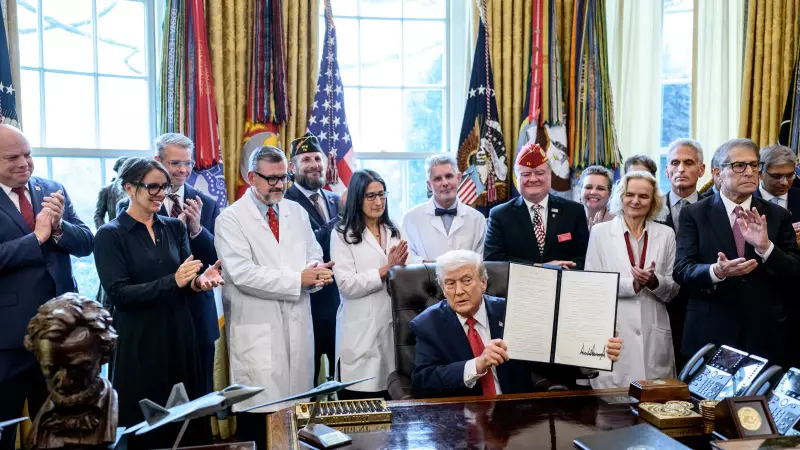
In a landmark decision that could reshape America's drug policy landscape, President Donald Trump on Thursday signed an executive order directing the reclassification of marijuana at the federal level. This move initiates the most significant shift in US drug policy in decades, loosening regulations that have treated cannabis as one of the most dangerous substances for over half a century.
A Historic Policy Shift
The order, signed at the White House on December 18, 2025, instructs the Attorney General to move swiftly on rescheduling marijuana from Schedule I to Schedule III under the Controlled Substances Act. This reclassification acknowledges the plant's legitimate medical uses and places it alongside substances like common painkillers, ketamine, and testosterone, which are deemed to have a lower potential for abuse.
"We have people begging for me to do this, people that are in great pain for decades," President Trump told reporters, explaining his rationale. He clarified his personal stance, stating, "I don't want it, okay. I'm not going to be taking it. But a lot of people do want it. A lot of people need it." Senior administration officials emphasized that the primary goal is to expand medical research to better understand marijuana's risks and therapeutic potential.

Political Divide and Republican Opposition
The decision has triggered a sharp political divide. While Senate Democratic leader Chuck Schumer welcomed the move, it faced immediate criticism from dozens of lawmakers within Trump's own Republican Party.
A group of 22 Republican senators sent an open letter to the President, arguing that facilitating the marijuana industry conflicts with efforts to "re-industrialise America" and encourage healthy lifestyles. They cited concerns about health impacts, including impaired judgement and lack of concentration.
In a separate letter from August, nine Republican representatives told Attorney General Pam Bondi that "no adequate science or data" justifies reclassification. They warned that rescheduling would send a dangerous message to children that marijuana is safe. This internal GOP backlash highlights the complex politics surrounding the issue, even as public opinion polls show a majority of Americans support legalisation.
Implications for Industry and Research
The reclassification is poised to have far-reaching consequences. It could unlock billions of dollars in research funding and open doors for banks and investors who have been hesitant to engage with the cannabis industry due to its federally illegal status. The Centers for Medicare and Medicaid Services plans to allow some beneficiaries to use hemp-derived CBD products as early as April 2026.
However, President Trump and experts noted that marijuana will remain illegal at the federal level for recreational use and will still be subject to the existing patchwork of state and local laws. A majority of US states have already approved cannabis for medical use, with nearly 24 states legalising recreational use. Industry analysts stress that congressional action is still required to create stable, long-term federal regulation for the burgeoning market.
Market Reaction and the Road Ahead
The announcement triggered volatile trading in cannabis stocks. Shares of major companies like Tilray, Aurora Cannabis, SNDL, and Canopy Growth initially surged between 6% and 12% in afternoon trading but reversed course by Thursday's close, ending significantly lower. This volatility reflects the market's uncertainty about the implementation timeline and the ongoing regulatory hurdles.
The executive order marks the beginning of a formal administrative process, not an immediate change. The move dismantles a policy framework established in 1971, which classified cannabis as a Schedule I narcotic with "no accepted medical use and a high potential for abuse." The coming months will determine how this historic policy shift translates into tangible changes for patients, businesses, and the national conversation on drug policy.