

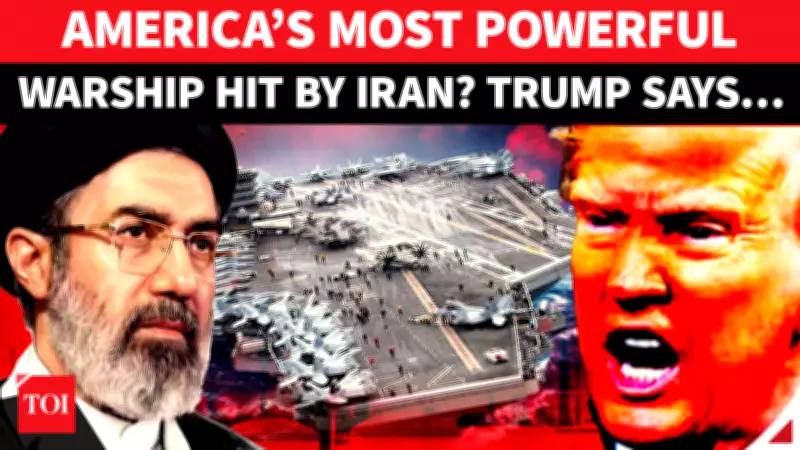
Trump Dismisses Iranian Claim of USS Abraham Lincoln Strike as False
In a significant development amid escalating Gulf tensions, former US President Donald Trump has categorically rejected Iran's claims that its military forces successfully struck the American aircraft carrier USS Abraham Lincoln (CVN-72) in the strategic Sea of Oman. The Iranian Revolutionary Guard Corps (IRGC) had asserted that its naval drones targeted the massive Nimitz-class carrier near the volatile Strait of Hormuz, forcing what they described as a tactical retreat by the US vessel.
US Central Command and Trump Issue Strong Denials
The United States Central Command (CENTCOM), which oversees American military operations in the Middle East, has officially dismissed the Iranian claim as entirely false and without merit. In a parallel statement, Trump accused the Tehran regime of deliberately spreading sophisticated AI-generated disinformation regarding damaged US military assets in the region. This accusation points to a new dimension in the information warfare tactics being employed amidst the ongoing standoff.
The USS Abraham Lincoln Carrier Strike Group remains fully operational and combat-ready, according to Pentagon officials. The carrier, along with its accompanying destroyers and support ships, continues its patrol duties in the Gulf region, underscoring Washington's commitment to maintaining naval supremacy and ensuring freedom of navigation in these critical international waters.

Rising Tensions in the Gulf Region
The incident highlights the dangerously heightened tensions between the United States and Iran, which have been simmering for years over nuclear ambitions, regional influence, and maritime security. The Sea of Oman and the adjacent Strait of Hormuz are particularly sensitive areas, as they serve as vital chokepoints for global oil shipments. Any military confrontation here could have severe repercussions for international energy markets and geopolitical stability.
Iran's claim, whether factual or fabricated, appears designed to project strength and test American resolve. By alleging a successful strike on one of the US Navy's most powerful assets, Tehran may be attempting to bolster its domestic narrative of resistance against Western powers while signaling its asymmetric warfare capabilities to regional adversaries.
Broader Context of US-Iran Relations
This episode occurs against a backdrop of persistent hostility and periodic flare-ups between Washington and Tehran. The relationship has been characterized by:
- Ongoing disputes over Iran's nuclear program and ballistic missile development
- Repeated incidents involving commercial shipping and naval vessels in the Gulf
- Cyber warfare and espionage campaigns conducted by both nations
- Proxy conflicts playing out across the Middle East, from Yemen to Syria
Trump's vocal denial and accusation of AI disinformation reflect the evolving nature of modern conflicts, where digital manipulation and psychological operations are becoming as important as traditional military engagements. The US administration has emphasized that such claims will not deter its commitment to regional allies or its naval presence in waters it considers international.
As both nations continue their war of words and posturing, the situation remains fluid and potentially volatile. The international community watches closely, hoping diplomatic channels can prevent any miscalculation that might spiral into open conflict.






