Trump Launches Blistering Attack on Birthright Citizenship Amid Supreme Court Hearing
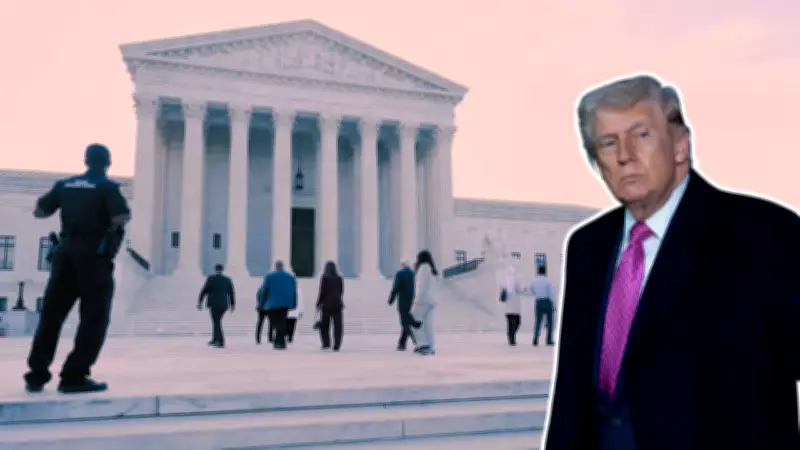
Former US President Donald Trump launched a sharp and provocative attack on birthright citizenship through social media, coinciding precisely with the Supreme Court of the United States hearing critical arguments regarding his administration's attempt to restrict this long-standing constitutional principle. The timing of his remarks underscored the highly political nature of a case that could fundamentally reshape how American citizenship is defined for generations to come.
Social Media Outburst Sets Political Tone
Posting on his Truth Social platform just ahead of the landmark hearing, Trump wrote with characteristic bluntness: "We are the only Country in the World STUPID enough to allow 'Birthright' Citizenship!" He followed this incendiary statement with a broader critique targeting the judicial system itself, adding: "Dumb Judges and Justices will not a great Country make!" These remarks immediately established a confrontational atmosphere for what legal experts recognize as one of the most significant citizenship cases in modern American history.
Supreme Court Justices Express Deep Skepticism
The hearing itself quickly revealed substantial judicial skepticism from multiple justices across the ideological spectrum. Chief Justice John Roberts pointedly questioned the Trump administration's legal attempt to expand narrow historical exceptions—such as children of foreign diplomats—to include children of undocumented migrants. "I'm not quite sure how you can get to that big group from such tiny and idiosyncratic examples," Roberts remarked during the proceedings, highlighting the logical leap required by the administration's argument.

Representing the Trump administration, Solicitor General John Sauer argued vigorously that citizenship should not automatically extend to children of individuals present in the country either temporarily or unlawfully. He emphasized the concept of "permanent domicile" as the crucial factor determining jurisdiction under the Fourteenth Amendment. Opposing this interpretation, Cecillia Wang of the American Civil Liberties Union maintained with equal conviction that the Constitution clearly and unequivocally grants citizenship to anyone born on American soil, citing extensive historical precedents and legal traditions.
Unprecedented Presidential Attendance and Legal Challenges
In a move unprecedented for a sitting president, Donald Trump attended portions of the Supreme Court hearing personally, listening as Solicitor General Sauer defended the executive order before departing the courtroom. The order in question, signed at the beginning of Trump's second term, seeks specifically to deny automatic citizenship to children born within the United States to parents who either entered the country illegally or hold temporary visas.
Justice Elena Kagan delivered particularly pointed pushback during the arguments, questioning the legal foundation of the administration's claim that undocumented migrants lack sufficient "allegiance" to qualify their children for constitutional protections. "The text of the clause does not support you," she told Solicitor General Sauer directly, referencing the precise wording of the Fourteenth Amendment.
Practical Concerns and Constitutional Interpretation
Several justices raised substantial practical implementation concerns alongside the constitutional questions. Justice Ketanji Brown Jackson questioned how such a restrictive citizenship policy would actually be enforced administratively, asking whether citizenship determinations would effectively need to occur "in the delivery room"—a scenario presenting enormous logistical and ethical challenges.

At the very heart of this monumental legal dispute lies the Fourteenth Amendment to the United States Constitution, which guarantees citizenship to all persons born within the United States who are "subject to the jurisdiction thereof." Lower federal courts have already blocked Trump's executive order, relying significantly on the landmark 1898 Supreme Court ruling in United States v. Wong Kim Ark, which definitively affirmed birthright citizenship for children born on American soil regardless of parental status.
Broader Implications and Historical Context
The Trump administration argues persistently that the Fourteenth Amendment was originally intended primarily to secure rights for formerly enslaved people following the Civil War and should not be interpreted to extend citizenship protections to children of undocumented migrants. Critics, including numerous civil liberties organizations and constitutional scholars, warn urgently that accepting this narrow historical interpretation could potentially place the citizenship status of millions of Americans at risk, creating a constitutional crisis of unprecedented scale.
This case represents a major test of Donald Trump's expansive view of executive power and his broader immigration enforcement agenda. A final ruling from the Supreme Court, expected by early summer, will determine conclusively whether his effort to end birthright citizenship survives rigorous constitutional scrutiny—or becomes one of the most consequential legal setbacks of his political career, with ramifications extending far beyond immigration policy alone.