

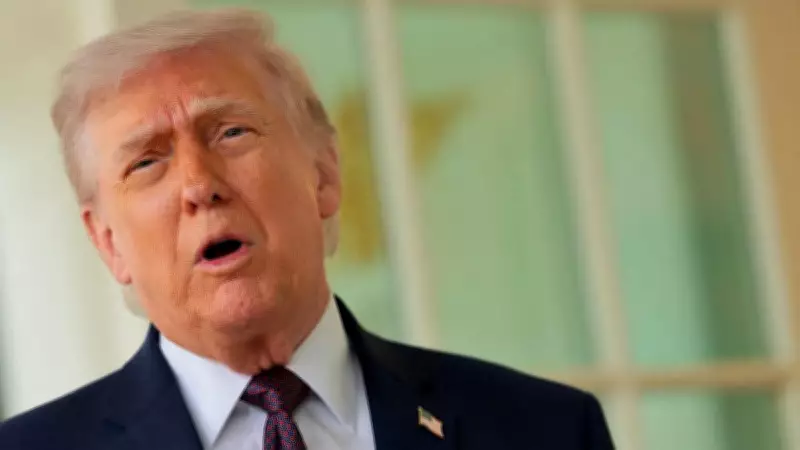
Trump Escalates Feud with Federal Reserve, Vows to Fire Chair Powell if He Refuses to Resign
In a dramatic statement that has sent shockwaves through financial and political circles, former US President Donald Trump has threatened to fire Federal Reserve Chair Jerome Powell if Powell does not voluntarily leave his position after a new Fed chair is appointed. This bold declaration underscores the ongoing and highly publicized tensions between Trump and the central bank's leadership, raising concerns about potential instability in US monetary policy.
A Direct Ultimatum to the Federal Reserve Chief
Trump's comments, made in a recent public address, were unequivocal: he stated that if current Federal Reserve Chair Jerome Powell does not step down following the installation of a new Fed chair, he will have no choice but to fire him. This ultimatum highlights the deep-seated disagreements Trump has historically had with Powell over interest rate policies and the Fed's independence, which Trump has often criticized as hindering economic growth during his presidency.
The context of this threat is rooted in Trump's long-standing frustration with the Federal Reserve's actions. During his time in office, Trump frequently lambasted Powell for raising interest rates, arguing that such moves undermined his administration's efforts to stimulate the economy. Now, with Trump positioning himself for a potential return to power, this latest remark signals a renewed intent to exert control over the central bank, a move that could have far-reaching implications for global financial markets.

Potential Implications for US Economic Stability
This development raises critical questions about the future of the Federal Reserve's autonomy and its role in shaping US economic policy. The Fed is traditionally designed to operate independently from political pressures to ensure stable inflation and employment levels. Trump's threat, however, challenges this principle, potentially leading to:
- Increased market volatility as investors react to uncertainties surrounding Fed leadership and policy direction.
- Erosion of confidence in the central bank's ability to make unbiased decisions, which could impact long-term economic planning.
- Political ramifications that might influence upcoming elections and debates over economic governance.
Experts warn that such a move could destabilize the US economy, as abrupt changes in Fed leadership often lead to unpredictable monetary policies. Historically, the Federal Reserve has maintained a degree of separation from the executive branch to avoid politicization of economic tools like interest rates. Trump's stance, if acted upon, could blur these lines, prompting calls for legislative safeguards to protect the Fed's independence.
Broader Reactions and Historical Context
The reaction to Trump's statement has been swift, with economists and policymakers expressing concern over the potential precedent it sets. Many argue that firing a Fed chair for political reasons could undermine the institution's credibility, making it harder to combat inflation or manage economic crises effectively. This incident is not isolated; it follows a pattern of Trump's criticisms of the Fed, which began during his presidency and have continued in his post-office commentary.
As the situation unfolds, stakeholders are closely monitoring how this threat might influence the Federal Reserve's current operations and future appointments. The possibility of a new Fed chair being installed adds another layer of complexity, as it could trigger a power struggle or legal challenges over the removal process. Ultimately, this episode highlights the ongoing debate over the balance between political oversight and institutional independence in key economic bodies.

